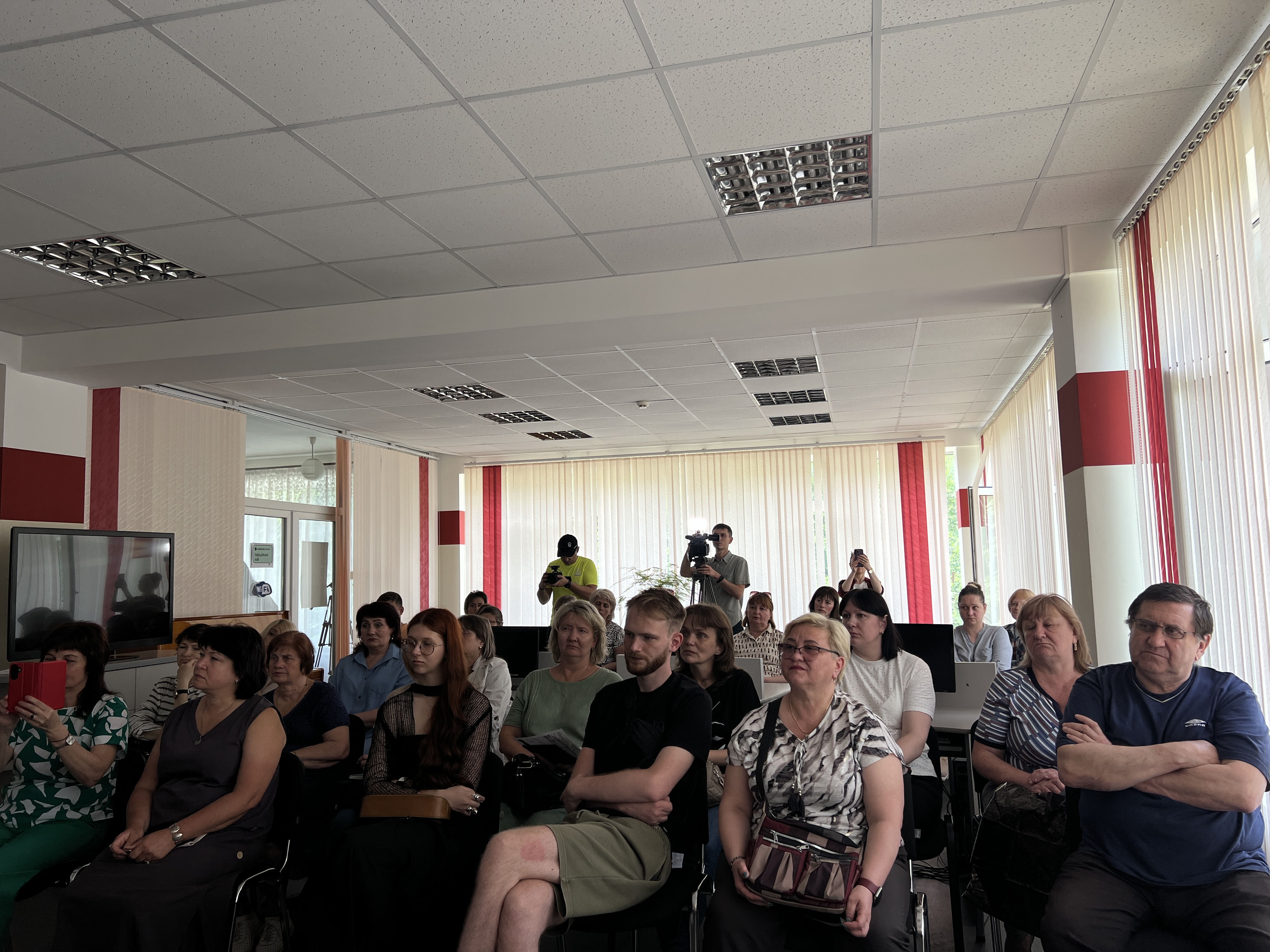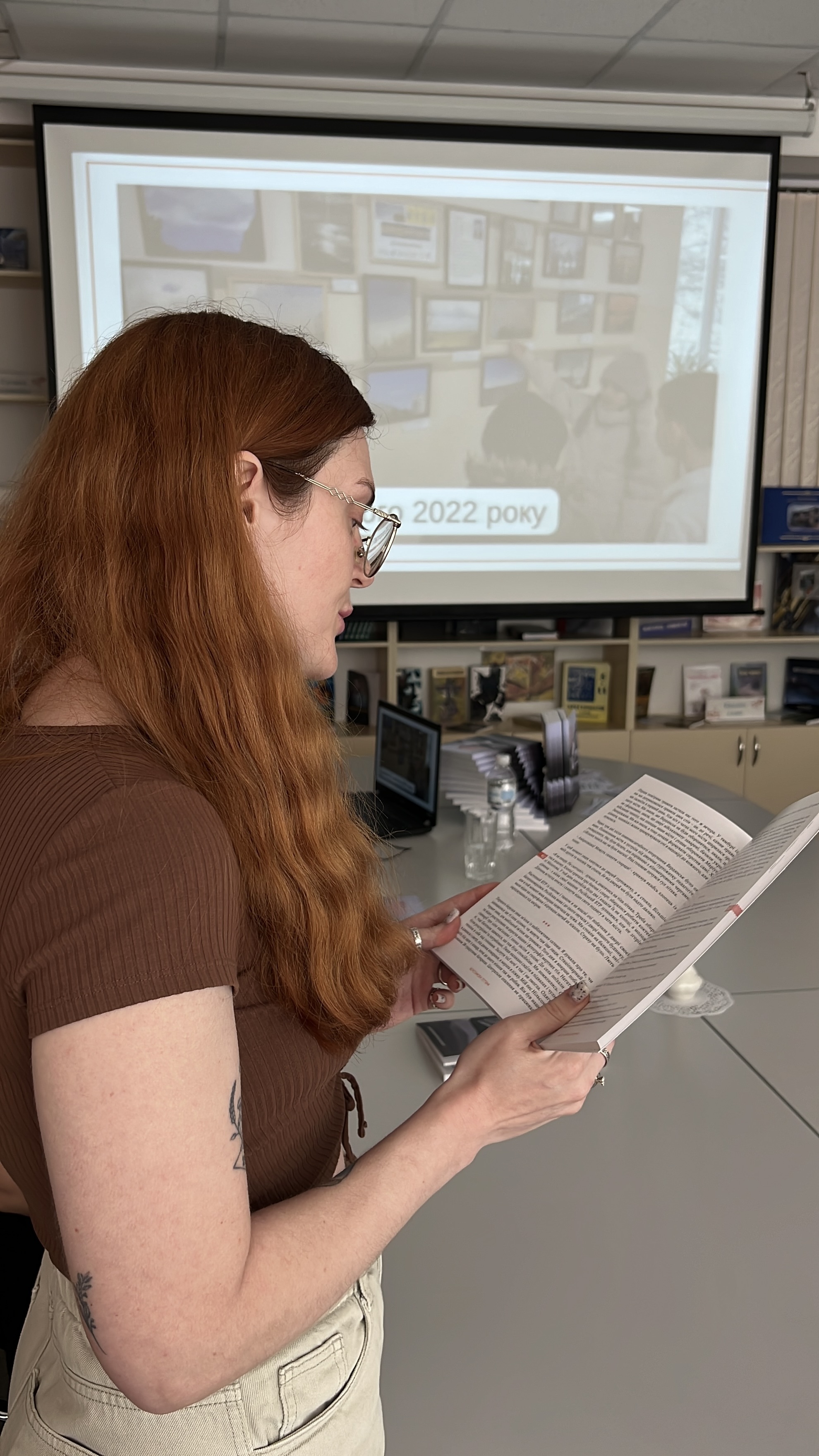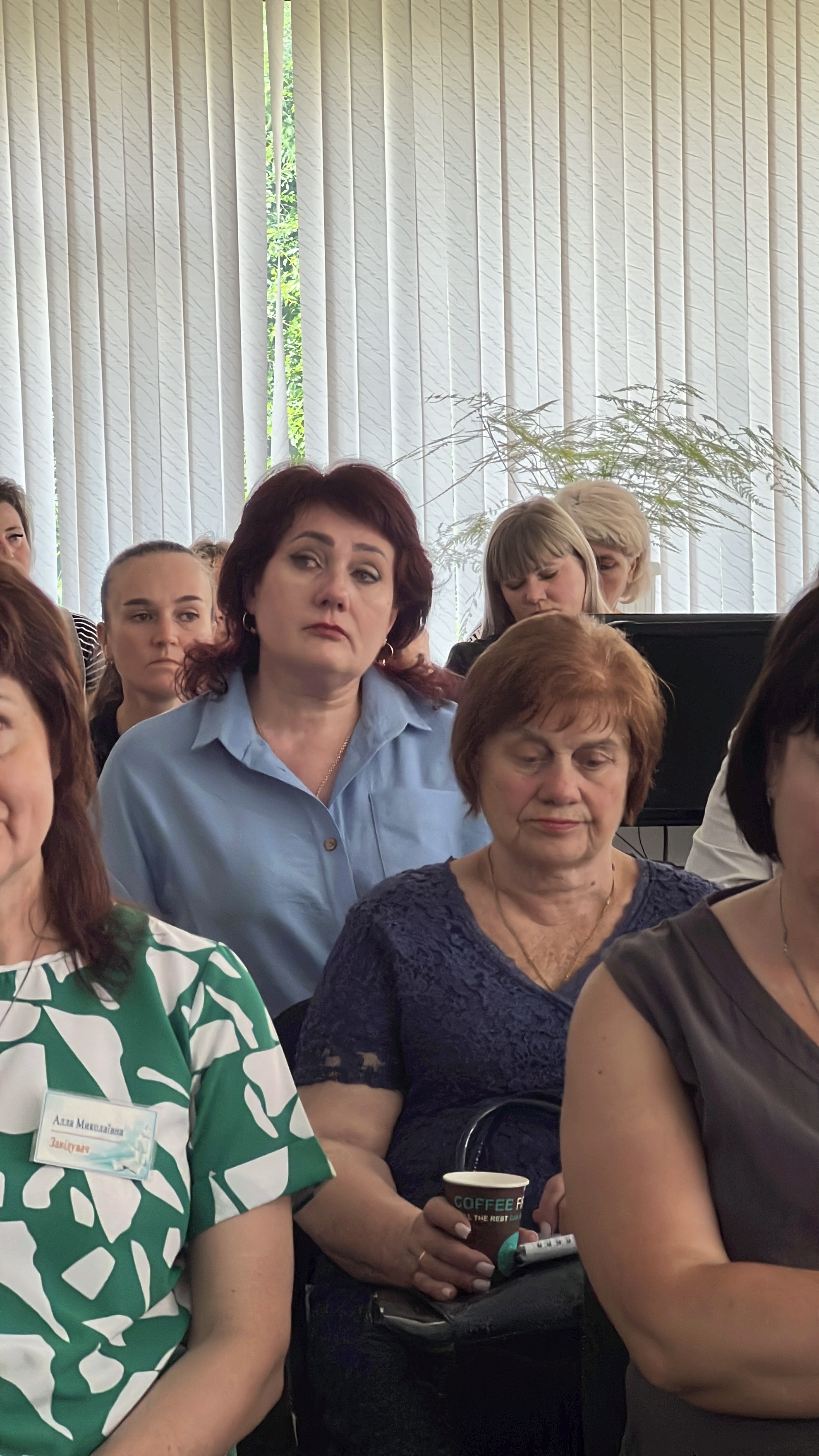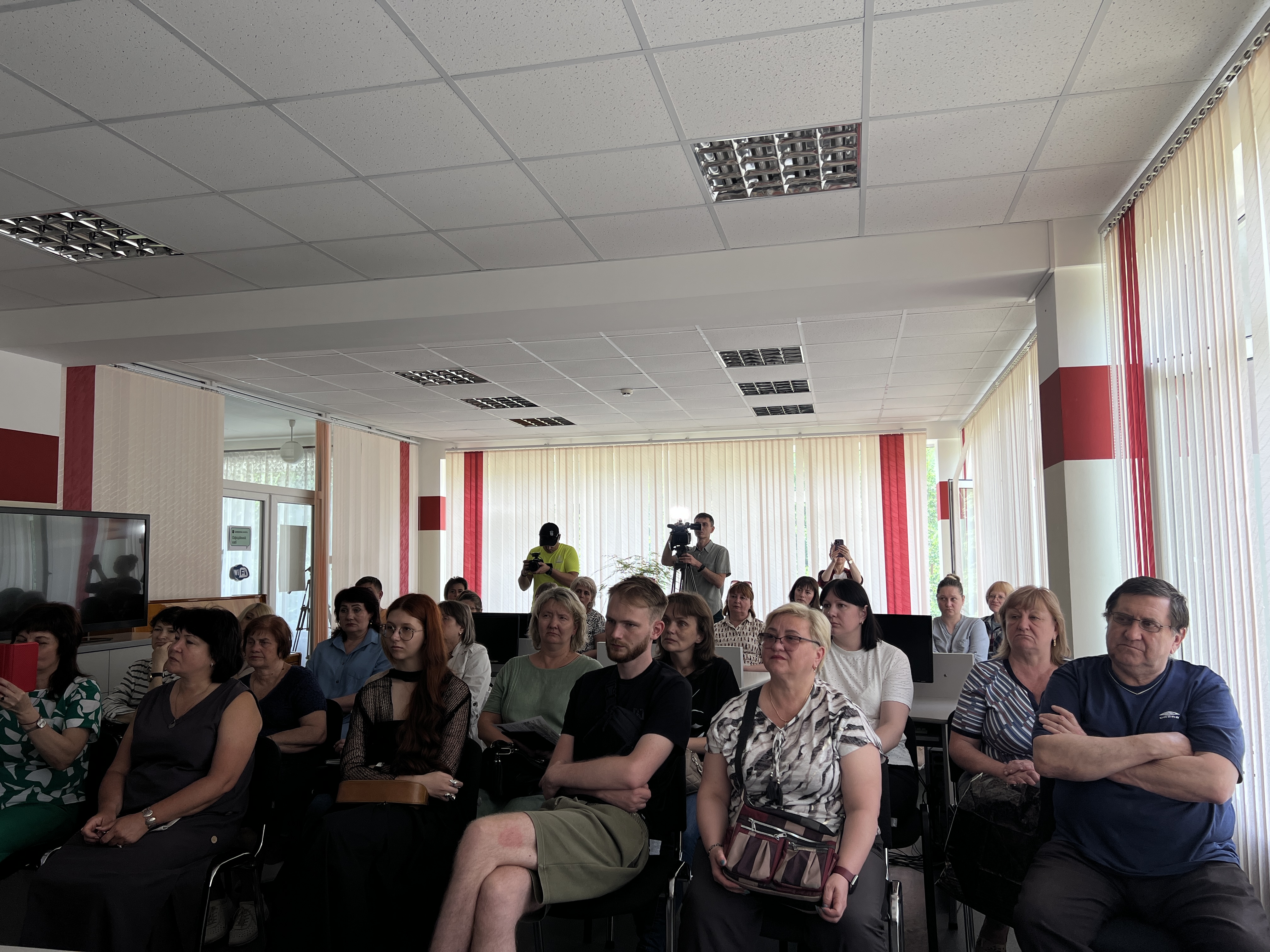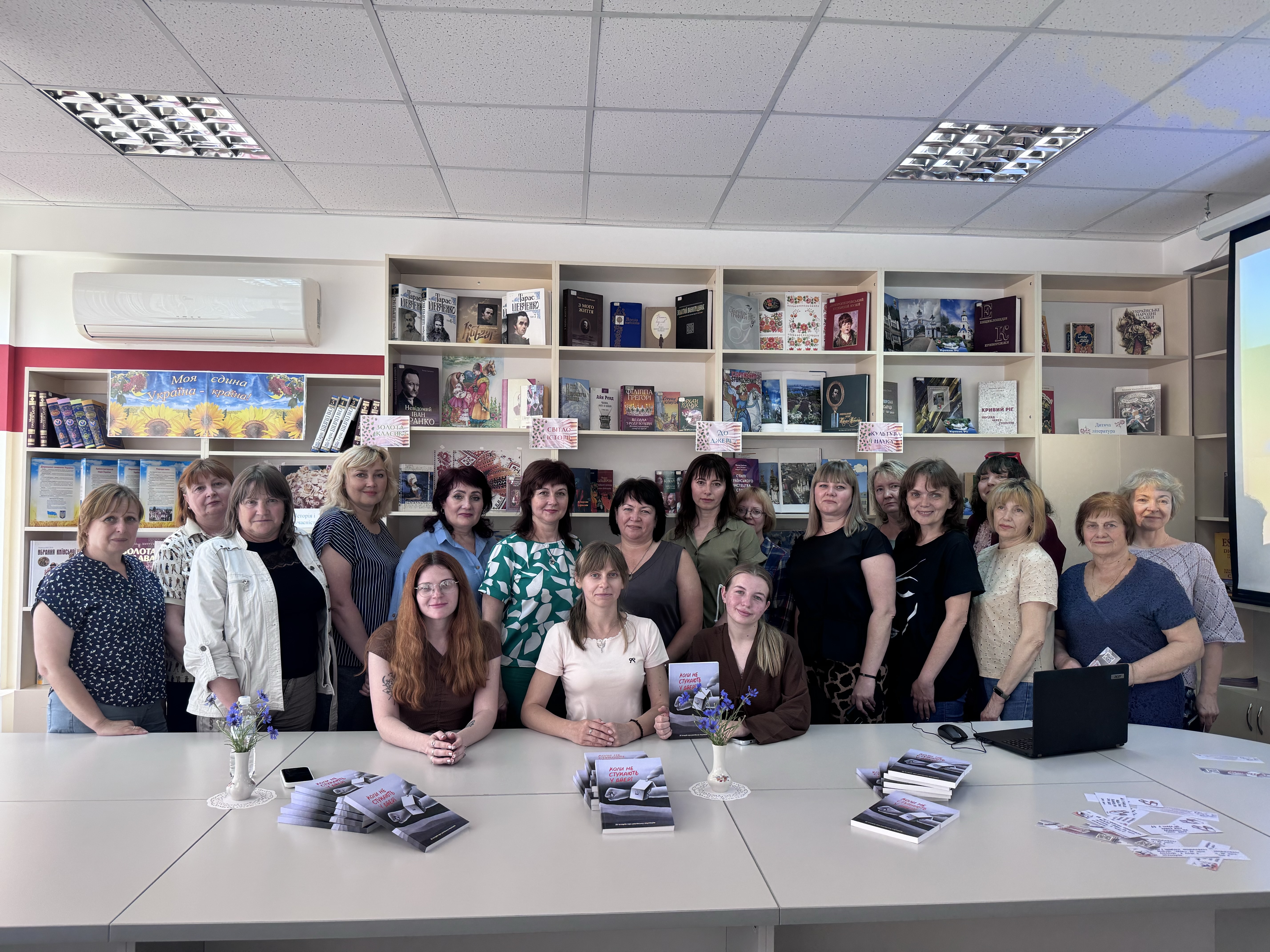
The Municipal Cultural Institution "City Library for Adults", Kryvyi Rih, hosted a presentation of the book "Uninvited" – a collection of 25 stories of people who survived the Russian occupation. The event brought together readers, librarians, educators and everyone who wanted to hear live testimonies about the war from those who saw it with their own eyes, rather than read statistical data.
At the beginning of the meeting, those present honored the memory of Ukrainian defenders and civilians who died as a result of Russian aggression with a minute of silence.
The book was put together by the "Eastern Ukrainian Center for Civic Initiatives". Ms. Maryna Suprun, a representative of the organization, said that the book was born from many years of work documenting Russian war crimes.
"People in Europe do not quite understand why Ukrainians are resisting the occupation. To them it seems that nothing in particular changes, except for the flag on government buildings. But we understand that this is not true, that absolutely everything changes," she emphasized.
According to Maryna Suprun, the authors of the book wrote their own stories, and the editors only helped to format the texts, without changing the content and intonation.
One of the authors was Tetyana Cherepanova, a teacher from Berdyansk. She admitted that at first, she doubted whether it was worth telling her own story.
“I told my friends then: I haven’t been in a basement. I wasn’t subjected to any violence. What am I to talk about? But they convinced me and said: your story should also be recorded.”
Tetyana said that for her participating in the project became a kind of therapy.
Her story is called “The City I Will Never Return To” – not because she does not believe in the de-occupation of Berdyansk, but because the city will never be the same as it was before the war.
Another author, Anastasia Kozak from Kherson, spoke next. She spoke about the occupation through simple everyday things.
"The Russians helped me discover what it is like to have completely empty store shelves. In the first months of the occupation, all we had was zucchini “caviar” and canned beans. And that was it."
Anastasia recalled standing in line for bread for three days, blackout curtains, and fear of night searches.
“When they say that occupation is just a change of flag, it’s absolutely not true. Occupation is a loss of life. Sometimes physical, and sometimes the life you are used to. People who have left home are critically lacking very simple things. Some - their favorite cup, some - home slippers. Because in reality, they lack home itself,” the author said.
After the speeches, the room fell silent. Many listeners did not hide their tears.
Maryna Suprun also shared her own story of being in the basement of a school in Yahidne, Chernihiv region, where Russian soldiers held hundreds of people.
“I was constantly thinking about something other than myself. I was thinking about how I would raise my younger sister if my mother died.”
Concluding the meeting, Tetyana Cherepanova urged not to stay indifferent to other people’s pain.
"Our stories can be traumatic to hear. But the only thing to fear is when such stories are met with indifference. "
It was this statement that was the main conclusion of the presentation. The book "Uninvited" is not just a collection of memories of the occupation. It’s a time document, the voice of people who survived the war, and a reminder that behind every number in the reports there are human lives.