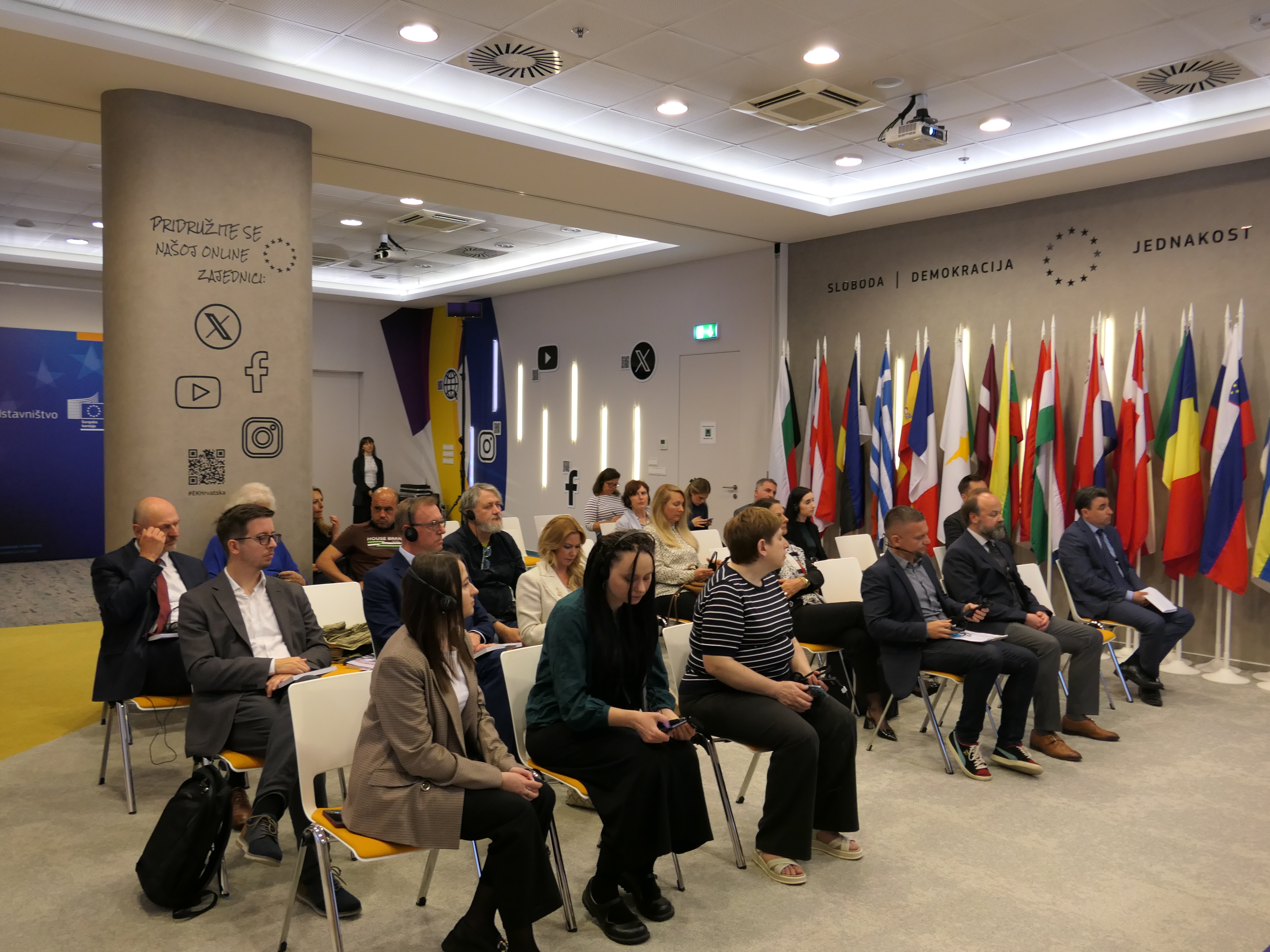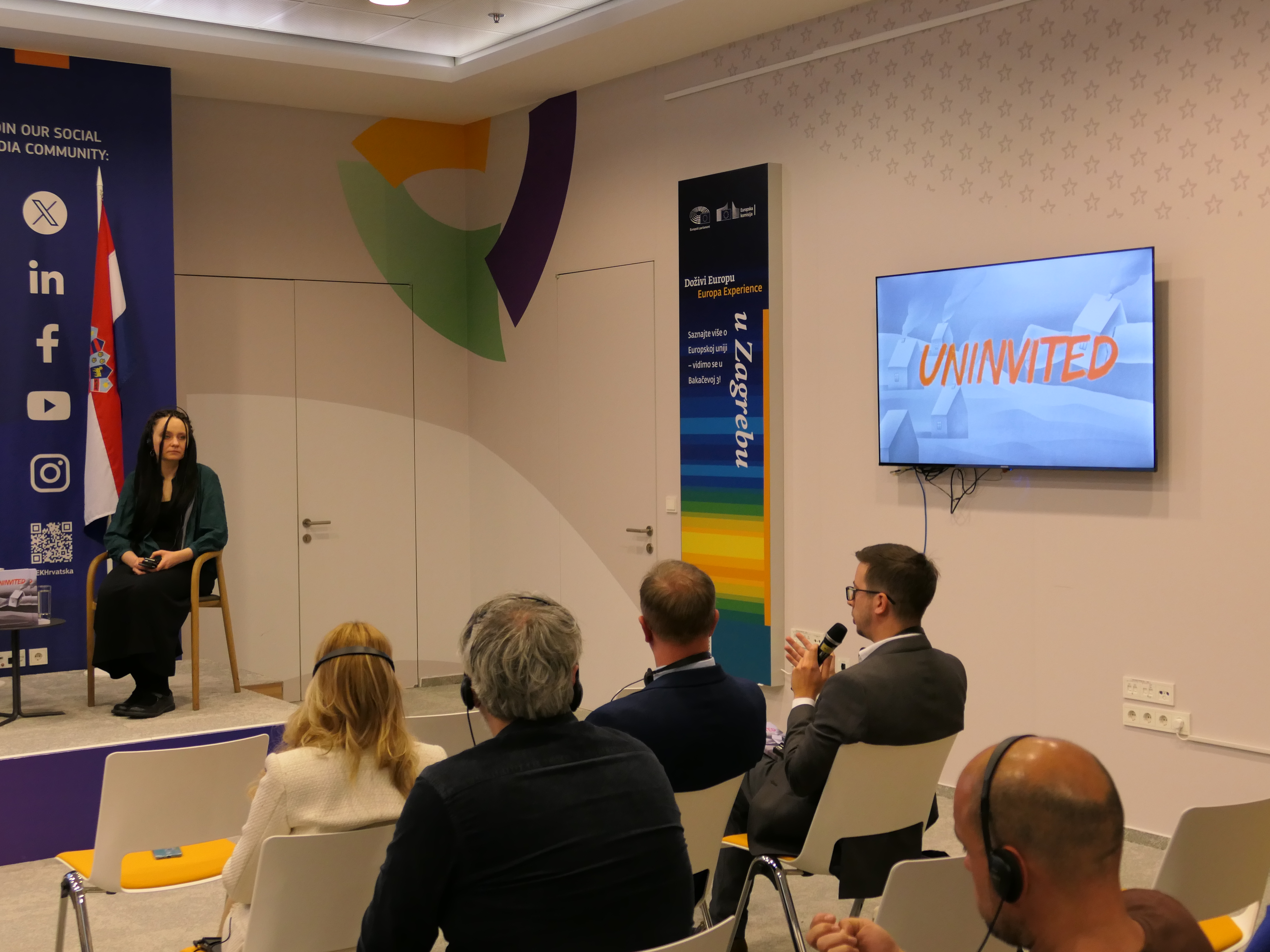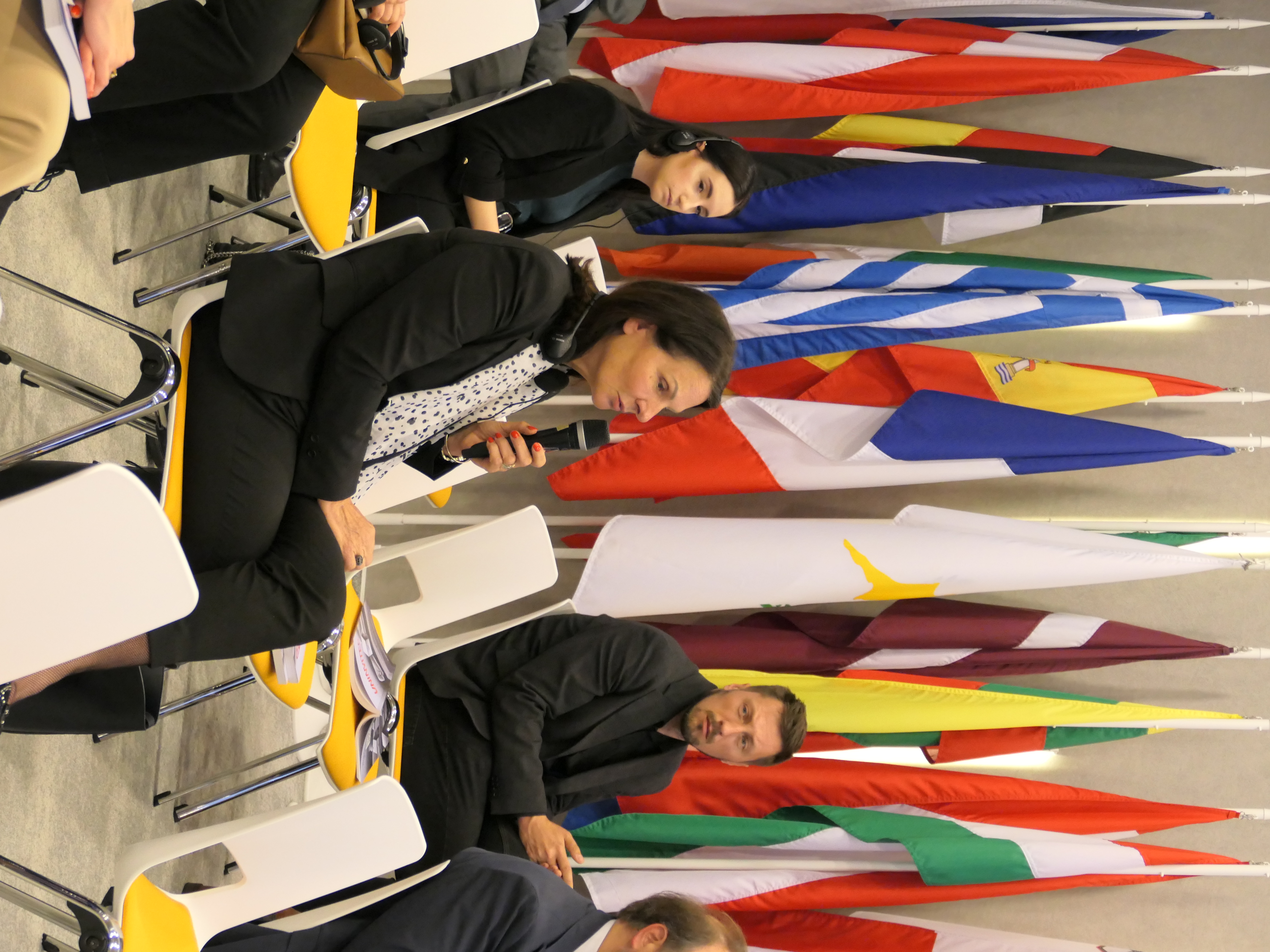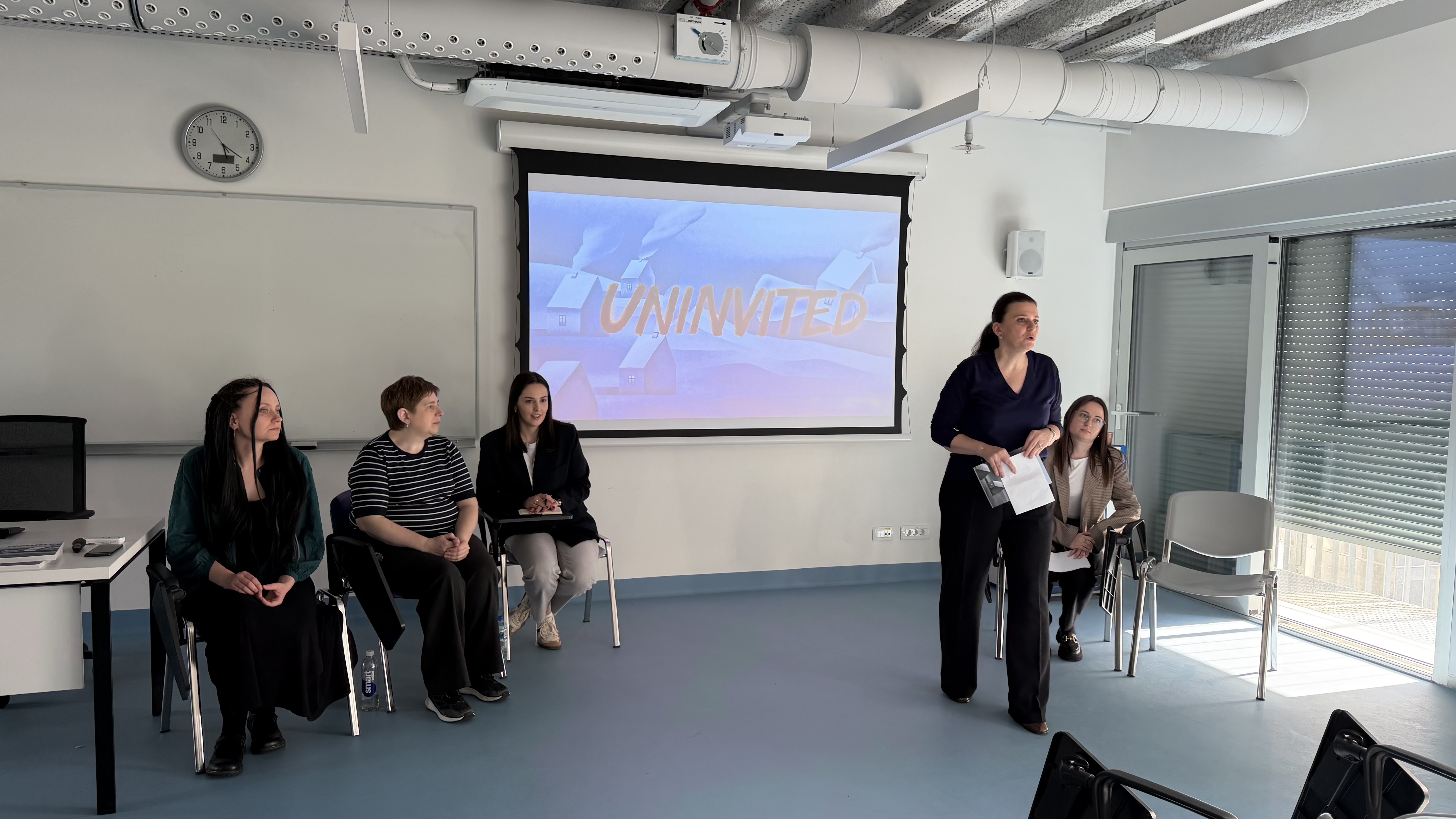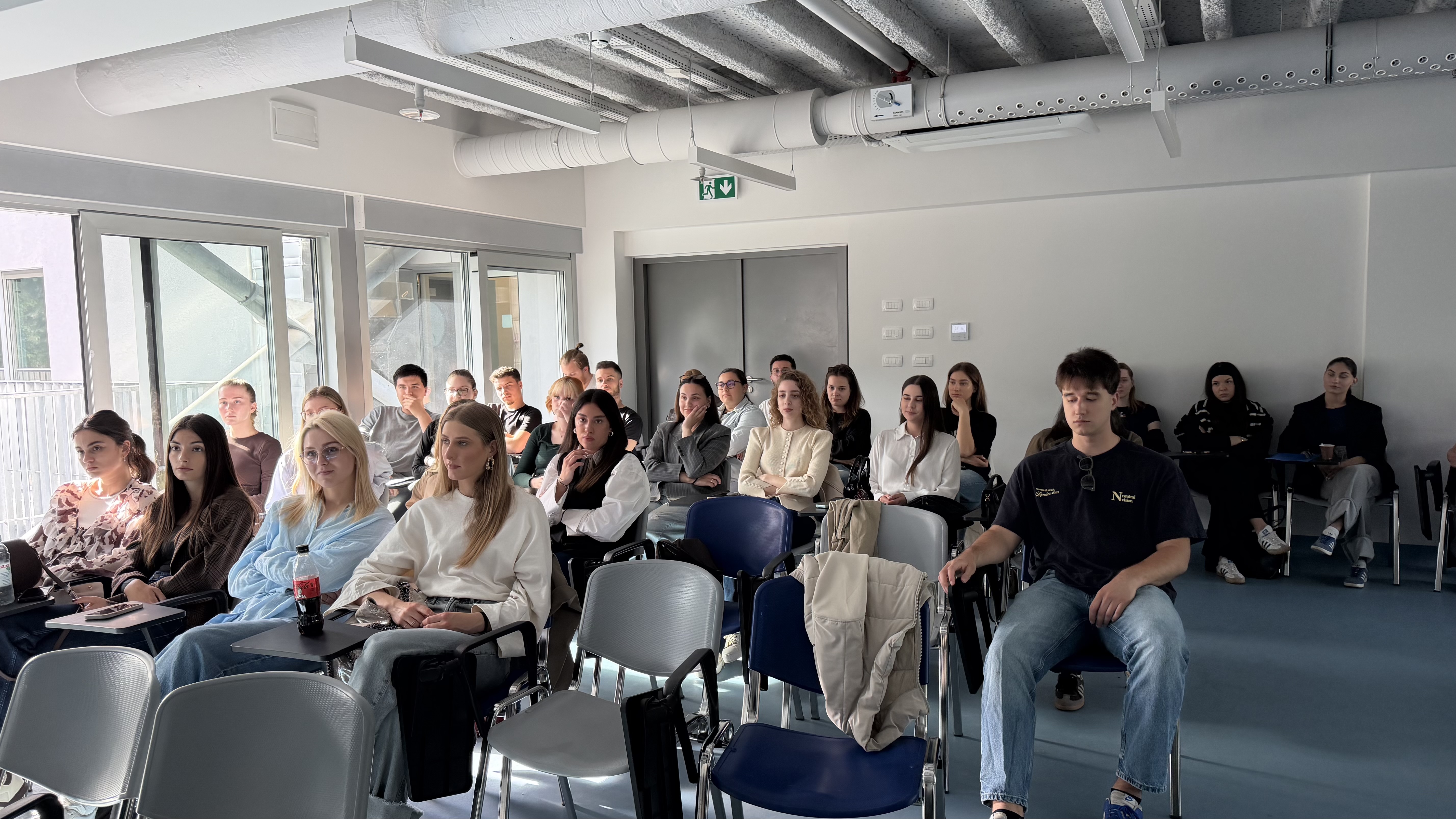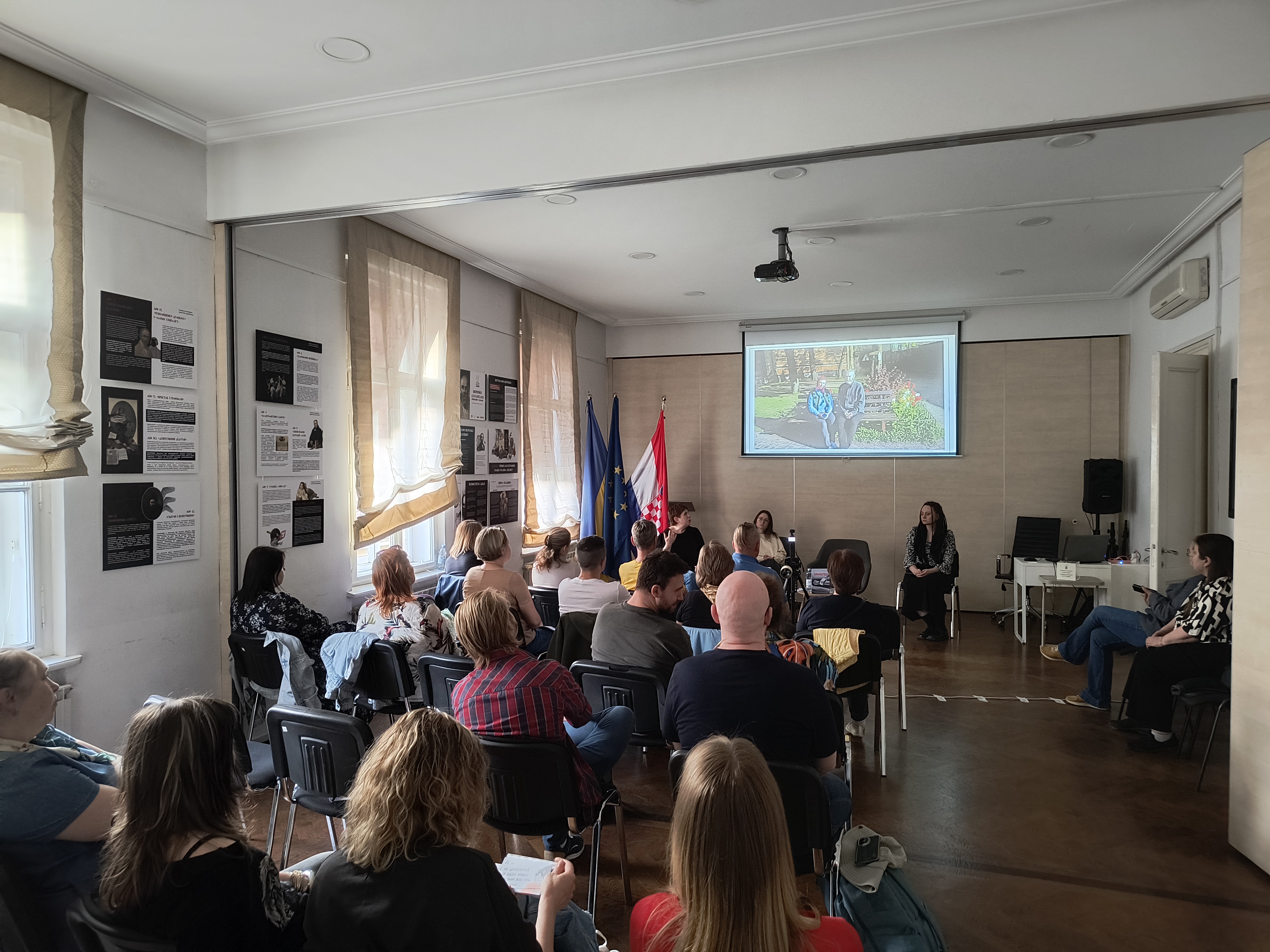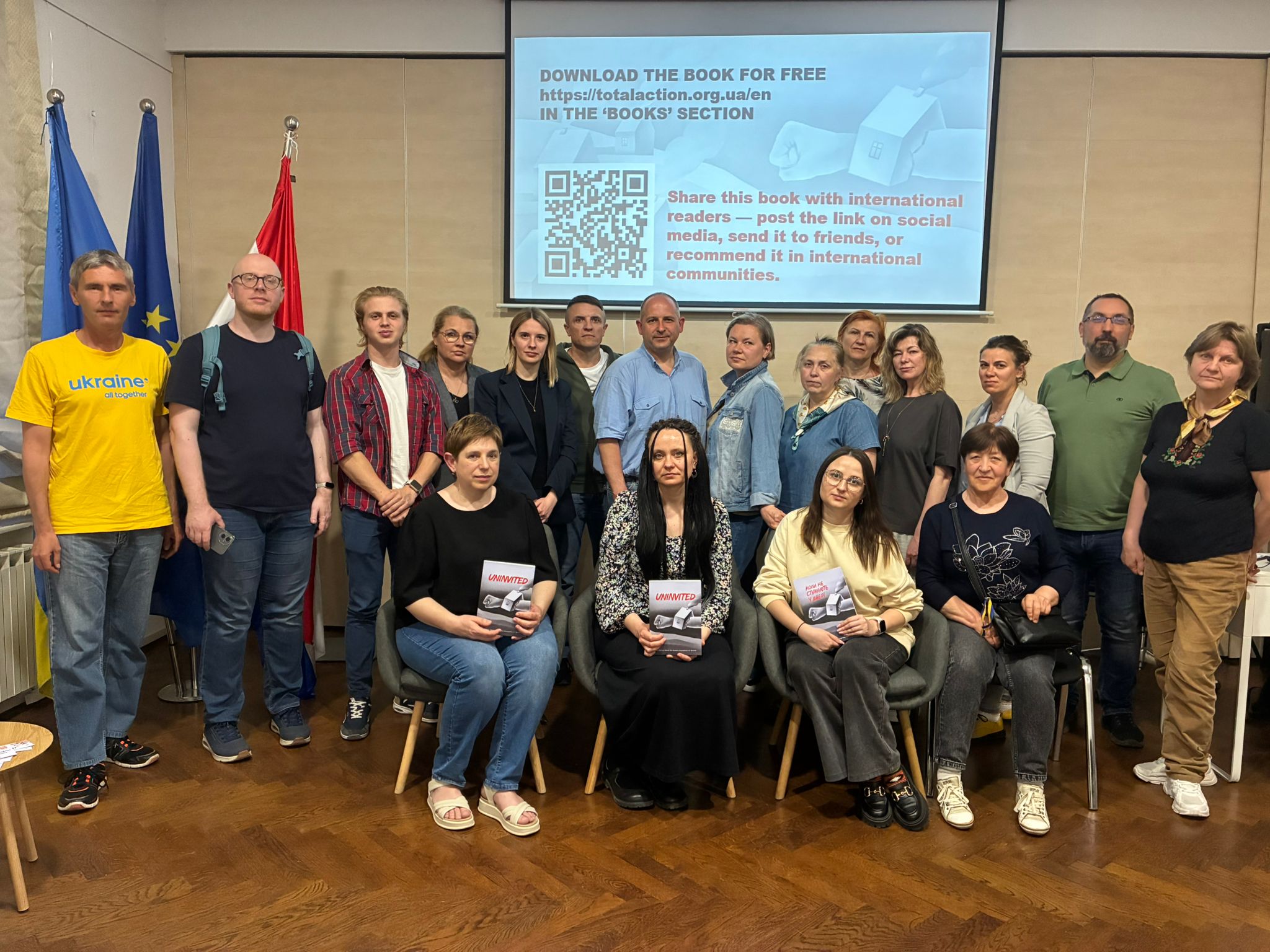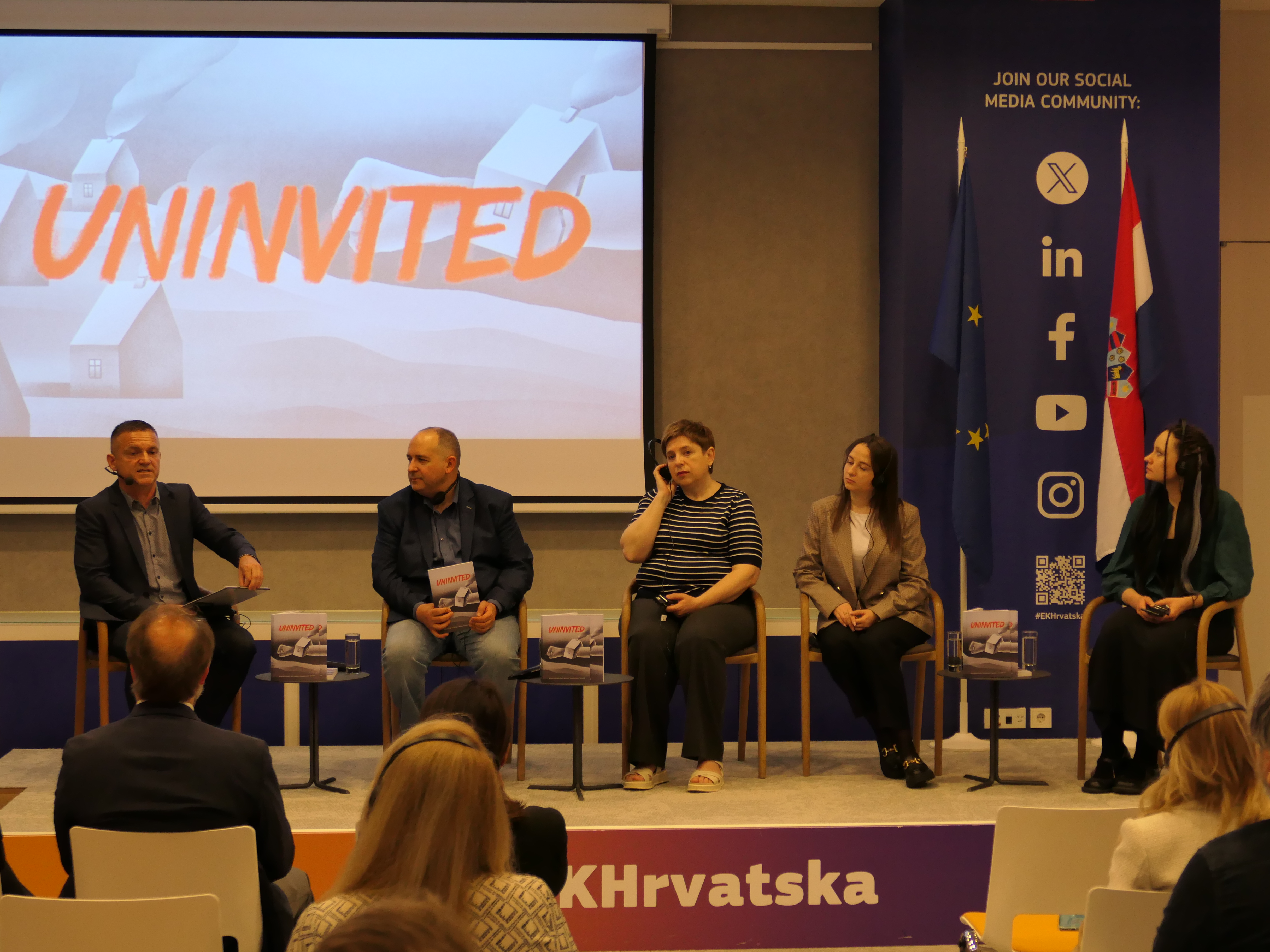
On May 7-8, a series of presentations of the book "Uninvited: 25 Stories about the Russian Occupation" – a documentary publication prepared by the Eastern Ukrainian Center for Civic Initiatives – took place in Zagreb. The book was presented at the Representative Office of the European Commission in Croatia ("House of Europe"), at the Political Science Department of the University of Zagreb, and at the Ukrainian House for the local Ukrainian community.
Diplomatic corps representatives, including ambassadors and diplomats from European countries, took part in the presentation at the "House of Europe." They emphasized the importance of further spreading the truth about the Russian aggression against Ukraine. The event was also attended by the Ukrainian Ambassador to Croatia, who thanked the Croatian side for its support for Ukraine.
During the presentations, the authors and EUCCI representatives spoke not only about the book itself, but also about the importance of documenting the human experience of war for an international audience. As emphasized by Mr. Volodymyr Shcherbachenko, the head of the organization, after 2022 it became clear that many people abroad do not realize how exactly the Russian occupation changes the lives of civilians.
“For many people in Europe, it might have looked like a simple change of a flag above a city council, while in reality the whole lives of civilians in the occupied territories were completely changed.”
According to him, this is why the organization decided to create a book that would explain what occupation is and how it affects people’s daily lives. The publication brought together 25 stories of people from different regions of Ukraine, written by the authors themselves after special creative writing training with a professional writer.
One of the central themes of the presentations was the contrast between the idea of war and the reality experienced by civilians. Author Natalia Huran, who survived the occupation in the Kyiv region, said that people often perceive war through films – as a story about the military and combat, but the real war comes to ordinary homes.
“When you live in a beautiful house with pets, and your parents live nearby, the last thing you expect to see through your window is a convoy of tanks.”
She spoke about life without communication, electricity and medical care, about fear for her parents and how the occupation destroys the very perception of what normal life is.
“As soon as the “Russian world” comes to your home, you are cut off from all the benefits of civilization.”
Another author is Valentyna Fedorchuk, a journalist from Kherson, who remained in the occupied city to document the events and film the first peaceful protests against the Russian military. She recalled that many people at the time sincerely believed that if they explained to the occupiers that they were not welcome here, they would leave.
“We looked them in the eye and said: ‘Get out of here, we don’t need you.’”
Special attention at the event was paid to the issue of abducted Ukrainian children. A representative of the EU institutions in Croatia stressed that the European Union continues to support Ukraine politically, diplomatically and humanitarianly, and the issue of the return of children has become one of the key issues at the international level.
“More than 20 thousand Ukrainian children have been abducted, and so far only a little over 10% have been returned.”
During the discussions, Croatian participants repeatedly drew parallels between the experience of Ukraine and the war in Croatia in the 1990s. The Deputy Minister of Culture of Croatia admitted that the stories of Ukrainians brought back her own memories of the war:
“Your personal stories show how deeply this aggression destroys not only territories, but also human lives, families, memory and a sense of home.”
In response, the Ukrainian authors spoke about the fear of re-occupation and that for them freedom has ceased to be an abstract concept.
“We are no longer afraid of dying. We are afraid of being occupied again.”
The events were conducted with the support of the Ukrainian Embassy in Croatia, which participated in their organization and facilitated meetings with the diplomatic and academic community. The embassy also held a separate meeting with the presentations’ participants, where the peculiarities of working with audiences in the countries of the region, the possibilities of holding information events to counter Russian propaganda and keeping the focus on the war in Ukraine were discussed.
The book presentations were held with the support of the Netherlands Helsinki Committee and the Ministry of Foreign Affairs of the Netherlands.