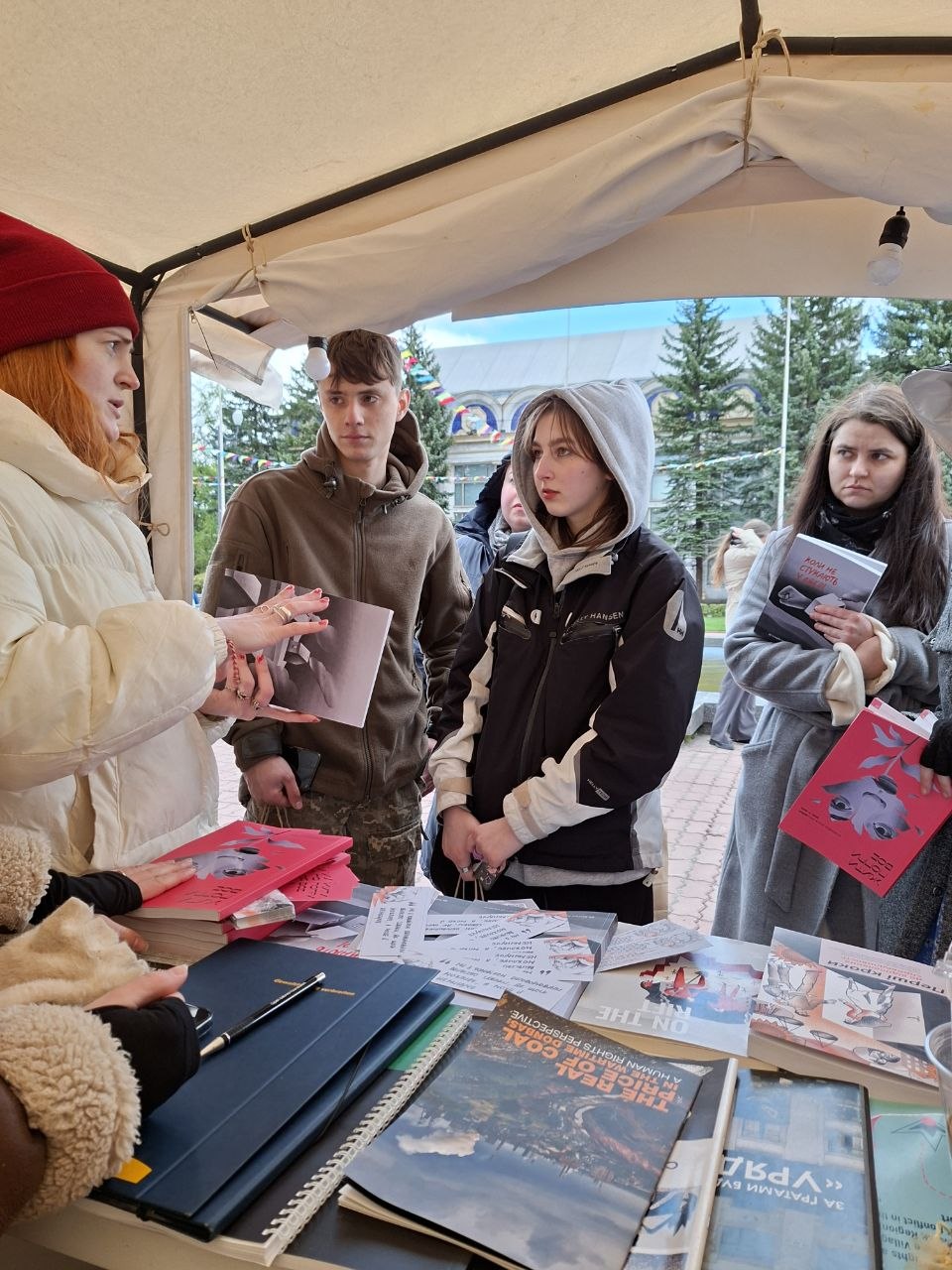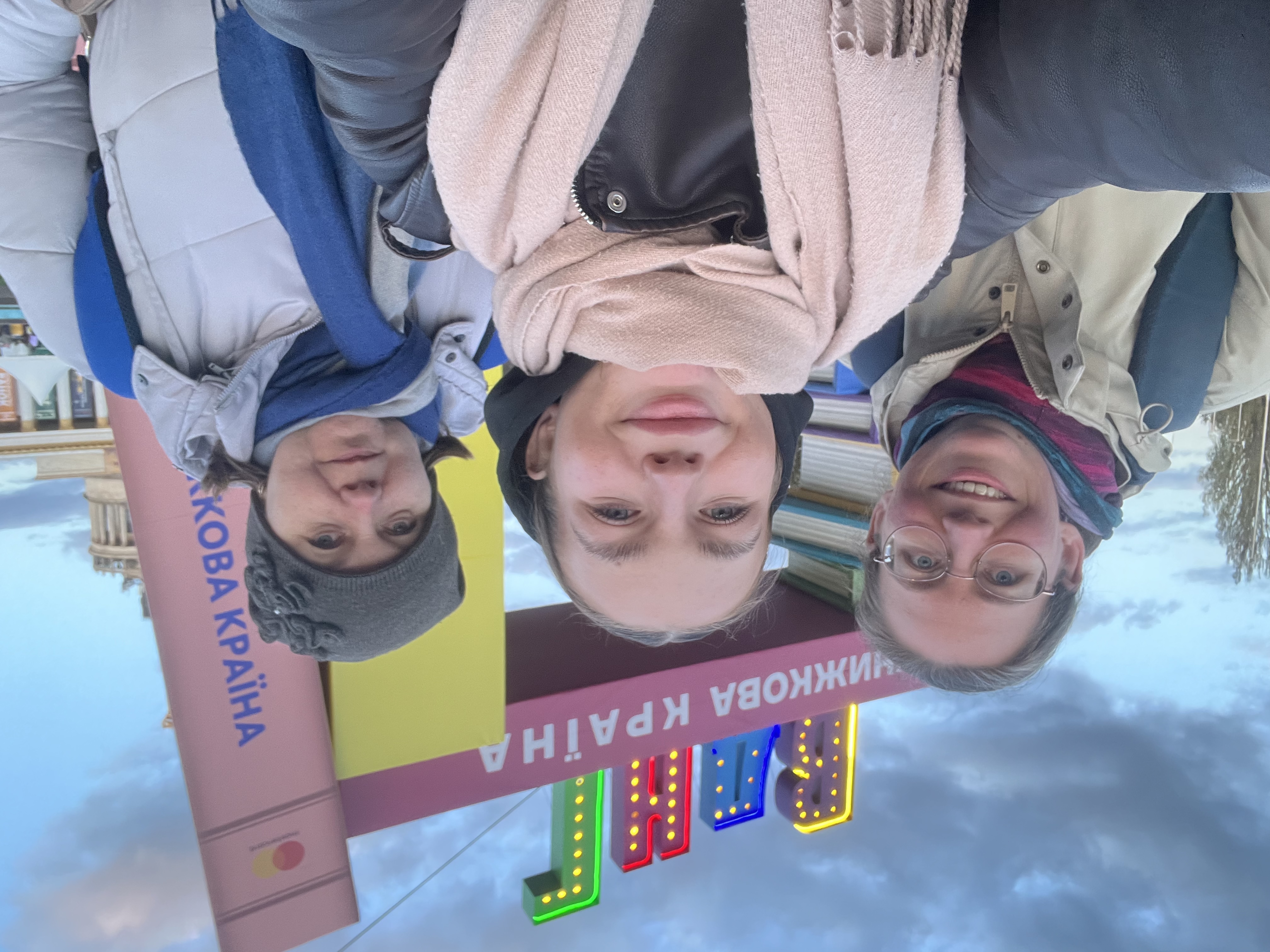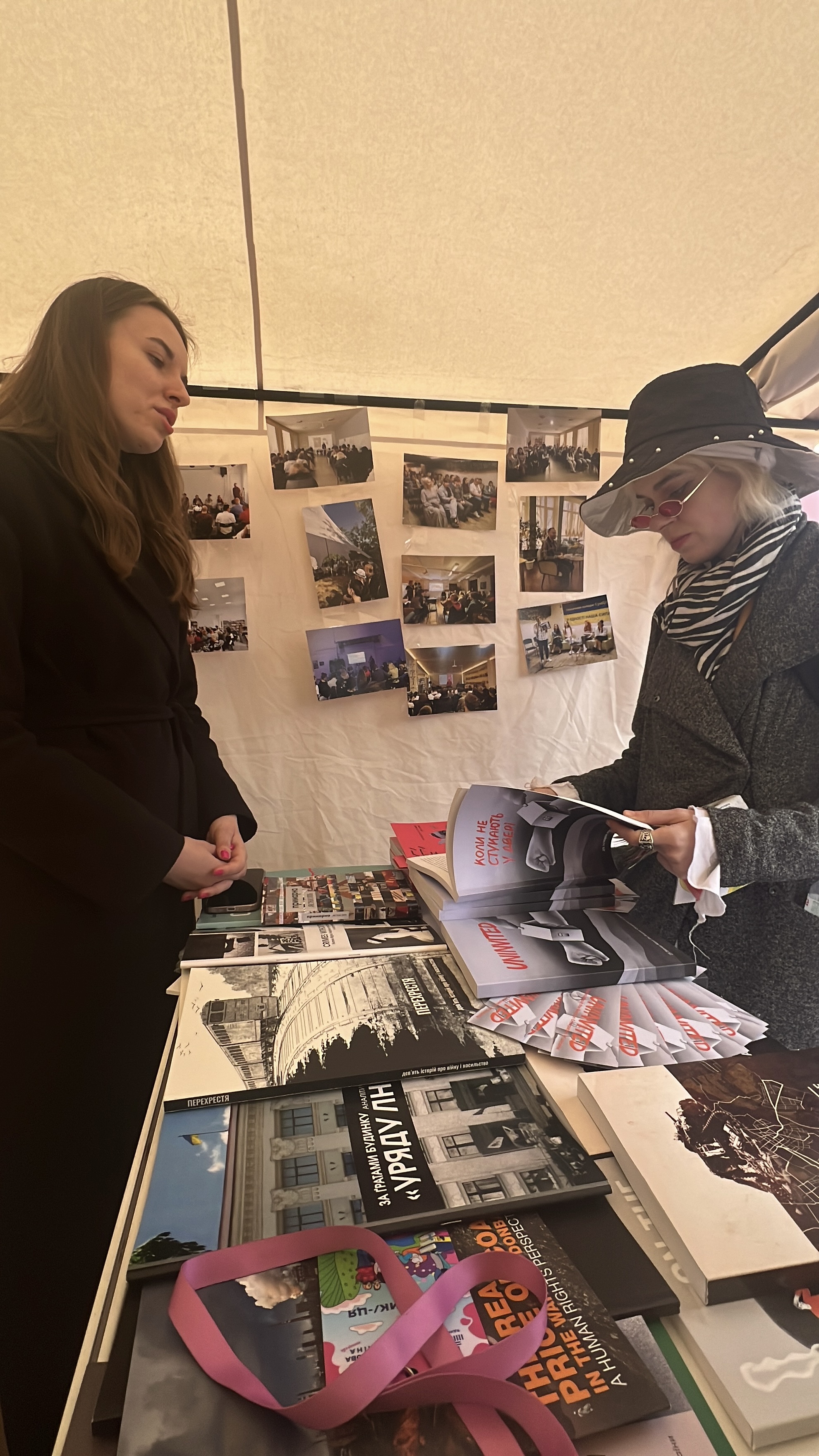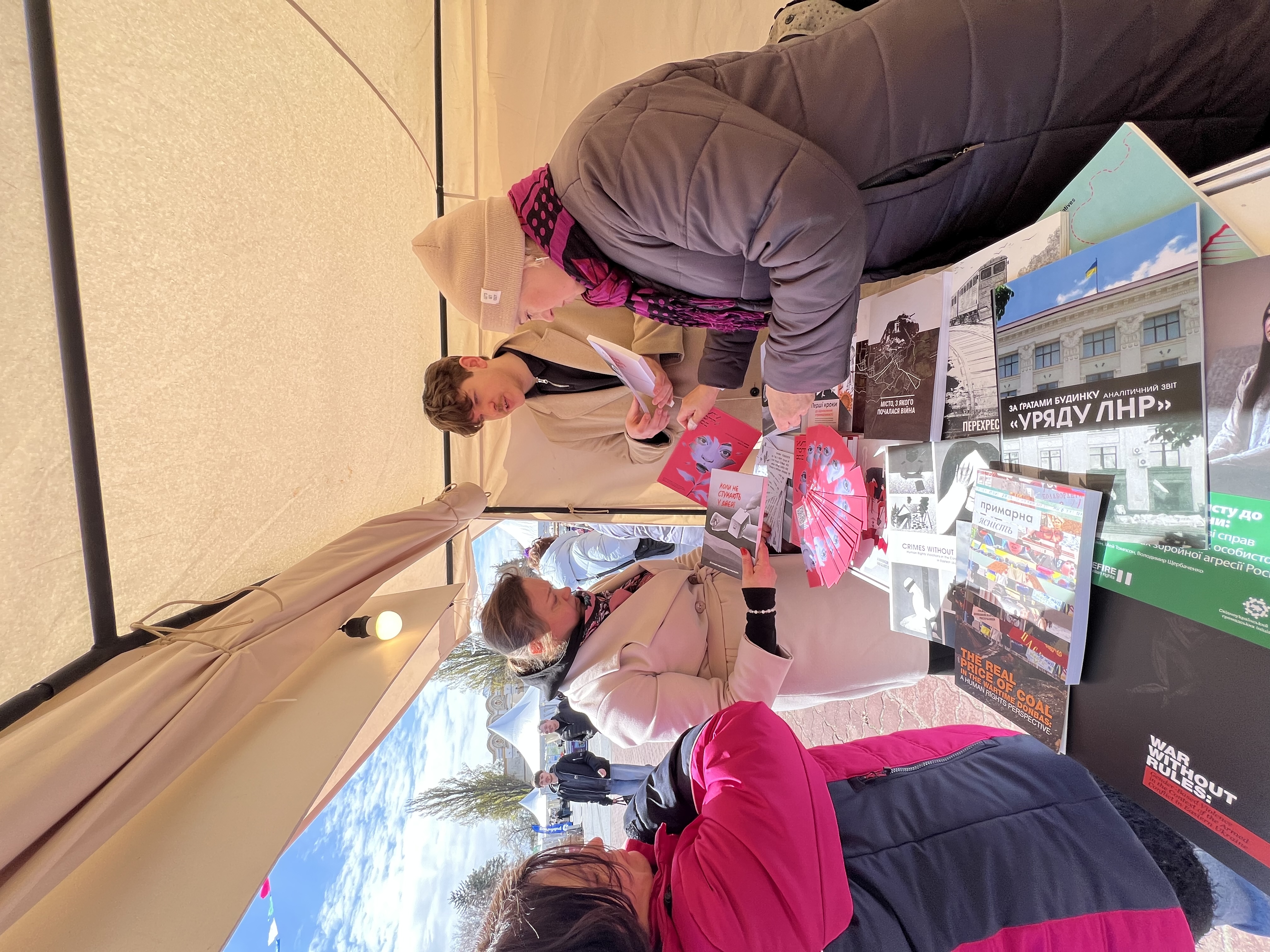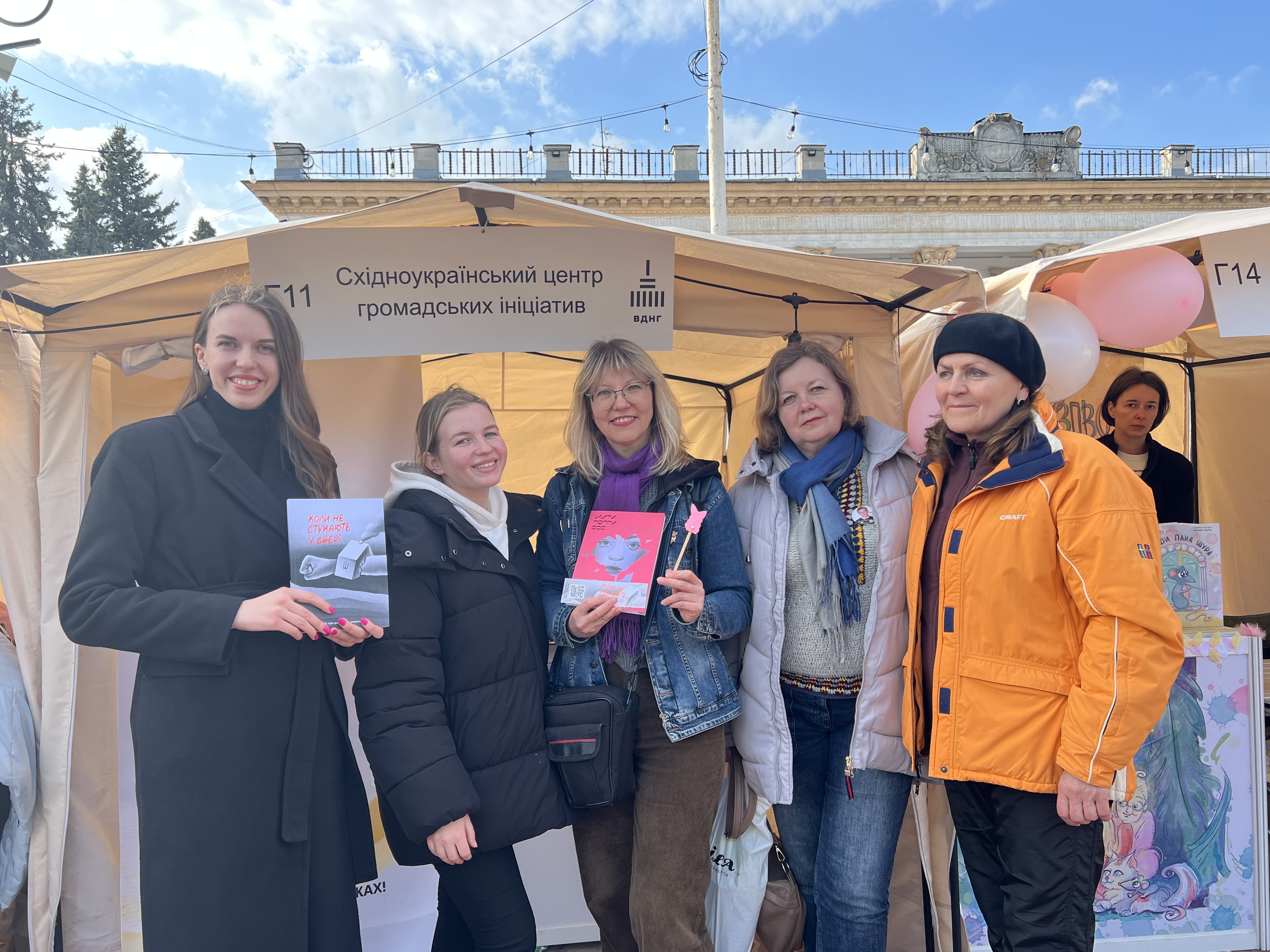
On April 23-26, the National Expo Center in Kyiv (VDNH) hosted the Bookland book festival that the Eastern Ukrainian Center of Civil Initiatives (EUCCI) joined as a participant.
During those several days, the EUCCI stand showcased publications and analytical materials about the war, in particular the books "Living Against All Odds" and "The Uninvited" that captured personal experiences of people who survived the occupation, captivity and losses. Alongside the books, there were reports on war crimes and other materials, as well as their English translations for international audiences.
On various days, the authors of the stories that made the books "Living Against All Odds" and "The Uninvited" themselves were present at the EUCCI stand. Visitors could not only get a book or a bookmark with a QR code to download the book, but also talk to people whose voices are heard in those stories.
That changed the very format of interaction - people came to see living witnesses and then stayed for a conversation.
Many visitors spoke about the importance of this work. Military officer Kyrylo, who visited the stand, put it this way:
“You are doing a very important job - documenting crimes... This is a very important thing of self-awareness, reflection and courage to talk about it. This is definitely not an easy read... but it’s very necessary.”
His thoughts were echoed by visitors from Eastern Ukraine, for whom it is especially important to see who and how re-tells their experiences:
“It is important that literature about the East... is published by people who really understand the topic, because it’s close to their hearts.”
Many said that such stories are not just texts, but a way to preserve the truth:
“This is testimony, this is facts, this is our history... so that our children and grandchildren know what really happened.”
And at the same time, a way to make the experience visible:
“Our voices... are usually very quiet. And it is precisely such initiatives that allow others to understand what it was like.”
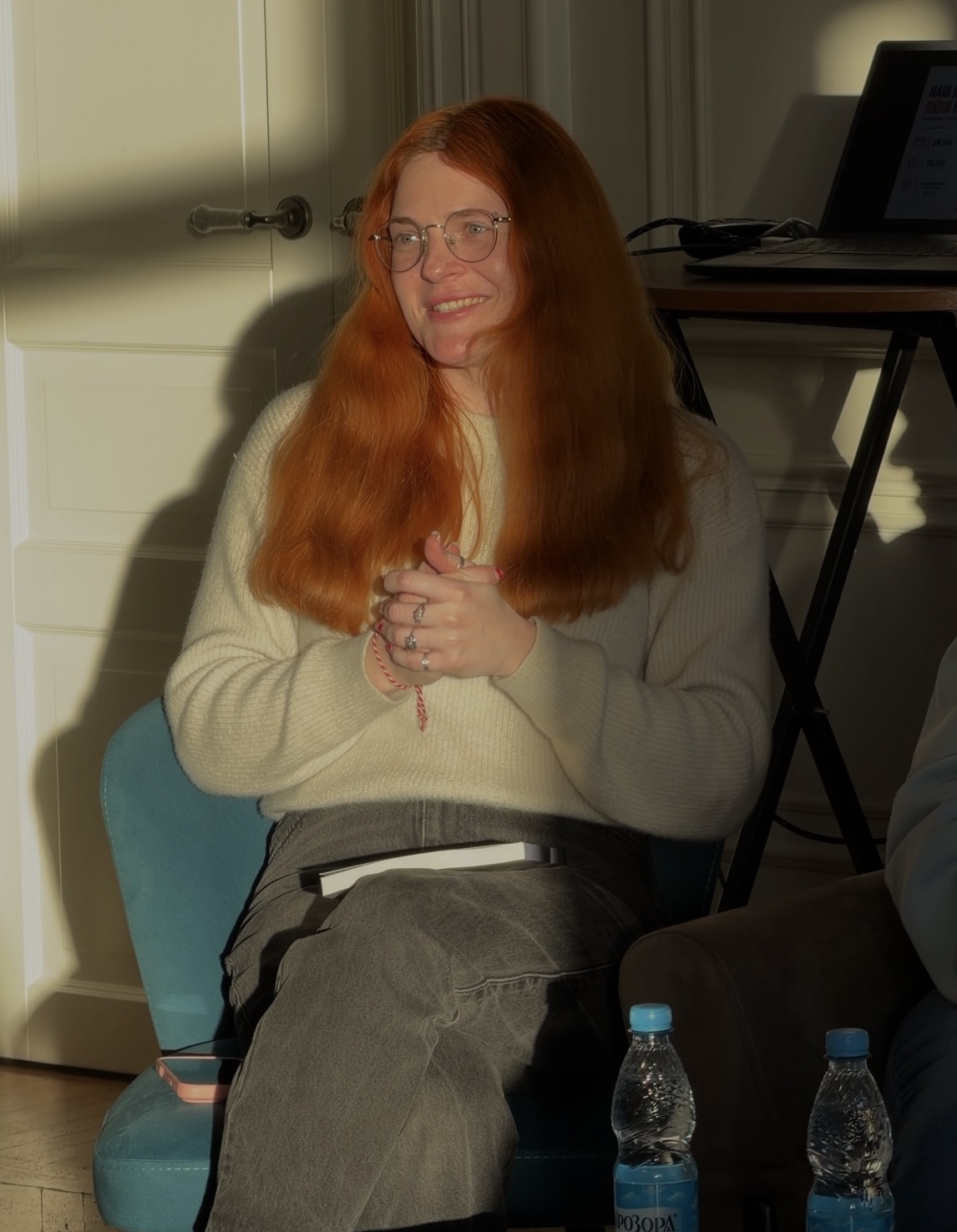
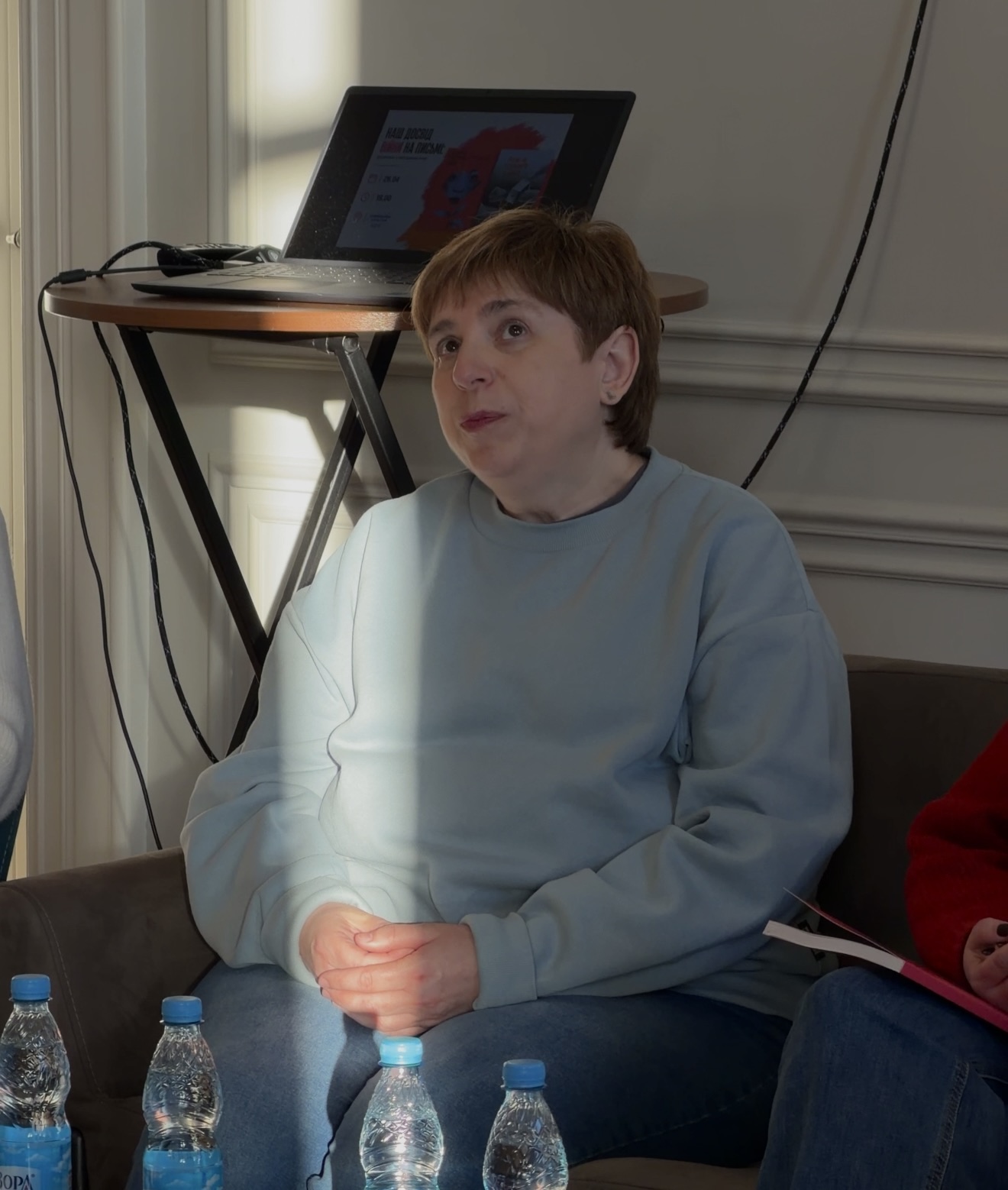
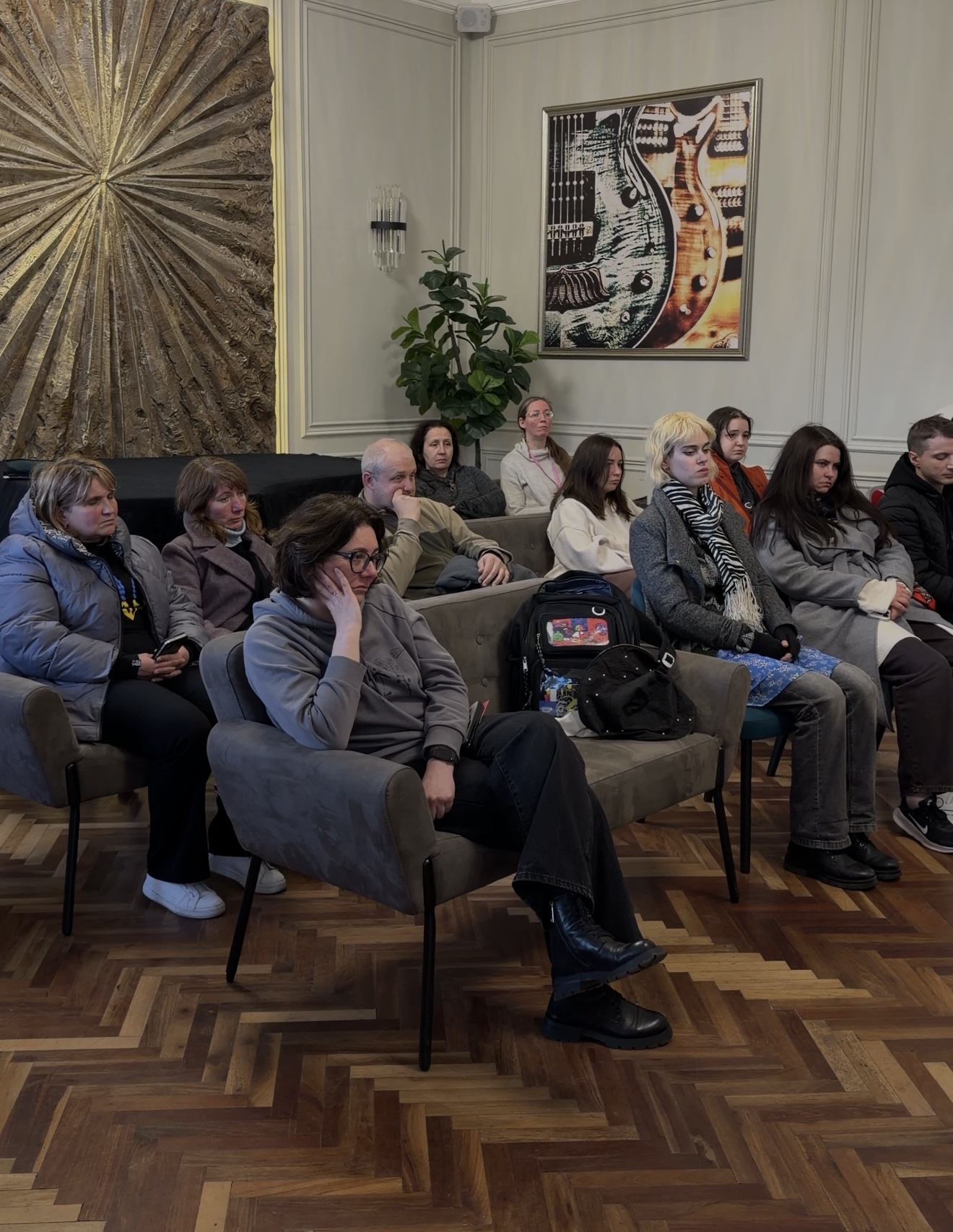
The EUCCI participation culminated in a public discussion entitled “Our Experiences of War in Writing” led by the authors of the books. The discussion revolved around three key themes: personal experience and writing, writing as testimony, and the impact of such texts on the reader.
Galyna Tyshchenko, Marina Suprun, Natalia Guran, and Tetyana Cherepanova – the authors of the books “Living Against All Odds” and “Uninvited” – took part in the discussion. They were joined by Slava Svitova, the book editor and creative writing instructor who had helped the authors.
The authors talked about how difficult it was to pluck up the courage to talk about what they’d experienced, but at the same time how writing and speaking out about those experiences gradually helped them to get over them. Some of the writers admitted that after the de-occupation they couldn’t talk about their experiences for a while, but over time, writing and speaking about it in public brought them relief. The authors emphasized that it was important to write now – to prevent people from forgetting, to preserve the memory of people and events, and to bring to light things that often don’t make it into the news. They also emphasized: no outside author can convey that experience as well as a person who lived it.
Slava Svitova noted that working with such stories requires great sensitivity - both from authors and readers. In a society living in war, it is important to remember the experiences of other people, even if they are not visible:
“A person can be wearing in a red dress, but go through hell... no one sees those invisible scars.”
That is why such books are not only about documenting facts. It’s about developing empathy:
“We are often very insensitive to the experiences of others... we need to realize that there are people around us with experiences different from ours.”
In particular, the writer spoke about the importance of everyday sensitivity – even in ordinary things, such as the language of communication, because there may be a person nearby who has experienced violence or captivity.
This thought became one of the key ones: the war changed everyone, but not in the same way, and that’s why one has got to pay more attention to others.