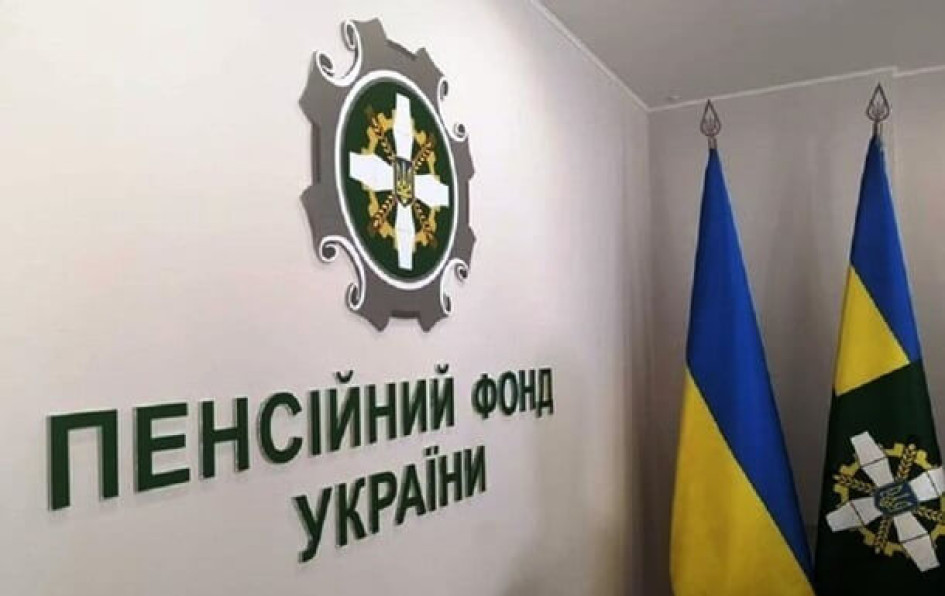
The lawyers of the Eastern Ukrainian Centre for Civic Initiatives have helped a former prisoner of war to secure the inclusion of the period of her unlawful detention in her pensionable service through the courts. The court handed down its judgment in case No. 160/25478/24 on 10 March 2026.
The Dnipropetrovsk District Administrative Court ruled that the Pension Fund’s refusal to grant a pension to the former prisoner of war was unlawful and ordered it to reconsider her application. The court also stated that the period of her unlawful detention in occupied Donetsk — nearly two years in captivity — must be included in her pensionable service.
The pension was not granted due to a ‘lack of service’
The woman is a native of the Donetsk oblast. After being released from captivity, she became an internally displaced person.
In April 2024, the woman submitted an application to the Pension Fund for an old-age pension.
However, in May, she received a refusal: the Fund stated that she allegedly had only 16 years, 11 months, and 19 days of pensionable service, whereas the law required significantly more.
Therefore, she was not granted a pension at all.
The court ruled that the captivity must be counted as pensionable service
The court emphasised that the law explicitly provides for the inclusion of the period of unlawful detention in the pensionable service for granting a pension.
The judgment states as follows:
‘The period of deprivation of personal liberty due to the armed aggression against Ukraine shall be counted towards the pensionable service to grant an old-age pension.’
This refers to the period from 2 October 2017 to 29 December 2019, when she was held captive by the so-called Donetsk ‘People’s Republic’.
The woman was detained for her pro-Ukrainian position. Under a pseudonym, she posted information on social media about the movement of Russian military equipment and expressed support for Ukraine. After being detained, she was held in the ‘Izolyatsia’ (Isolation) torture chamber and later in the Donetsk pre-trial detention centre.
In 2019, an illegal ‘court’ sentenced her to 13 years’ imprisonment for ‘espionage’, but she was released that same year during an inter-state prisoner exchange.
Upon her return, the state officially recognised her as a person deprived of liberty due to Russia’s armed aggression.
The court also noted that the Pension Fund had unjustly failed to take into account other periods of the woman’s employment: in particular, entries in her employment record book and time of caring for a child.
According to the case files, if all these periods are taken into account, her pensionable service amounts to over 37 years, which entitles her to an old-age pension.
The court ruled to overturn the Pension Fund’s decision to refuse the claim and ordered the authority to reconsider the application, taking all these periods into account.
The case dragged on for a year and a half
The woman brought the case to court in September 2024.
According to the law, such administrative cases must be considered within approximately 60 days, but the judgement was only made in March 2026 — almost a year and a half after the claim was submitted.
She had to actually live withut any pension all that time.
No pension certificate and even no humanitarian aid
The lack of a pension caused her other problems as well.
Since she had not been granted a pension, she could not obtain a pension certificate, i.e. a document confirming her retirement.
According to her, certain charitable organisations refused to provide her with humanitarian aid for the elderly because of this. Formally, she fell into the 60+ category, but she could not provide documentary evidence of her retired status, since her pension had never been granted.
Even following the court’s decision, she is still not receiving a pension since the document must first come into legal force, and only after that the Pension Fund must implement it.
Why is this judgment important
The key point in this case is the confirmation that the period of captivity due to Russian aggression must be included in pensionable service.
This is explicitly provided for in Ukrainian legislation. However, in practice, former prisoners of war sometimes have to defend this right in court.
