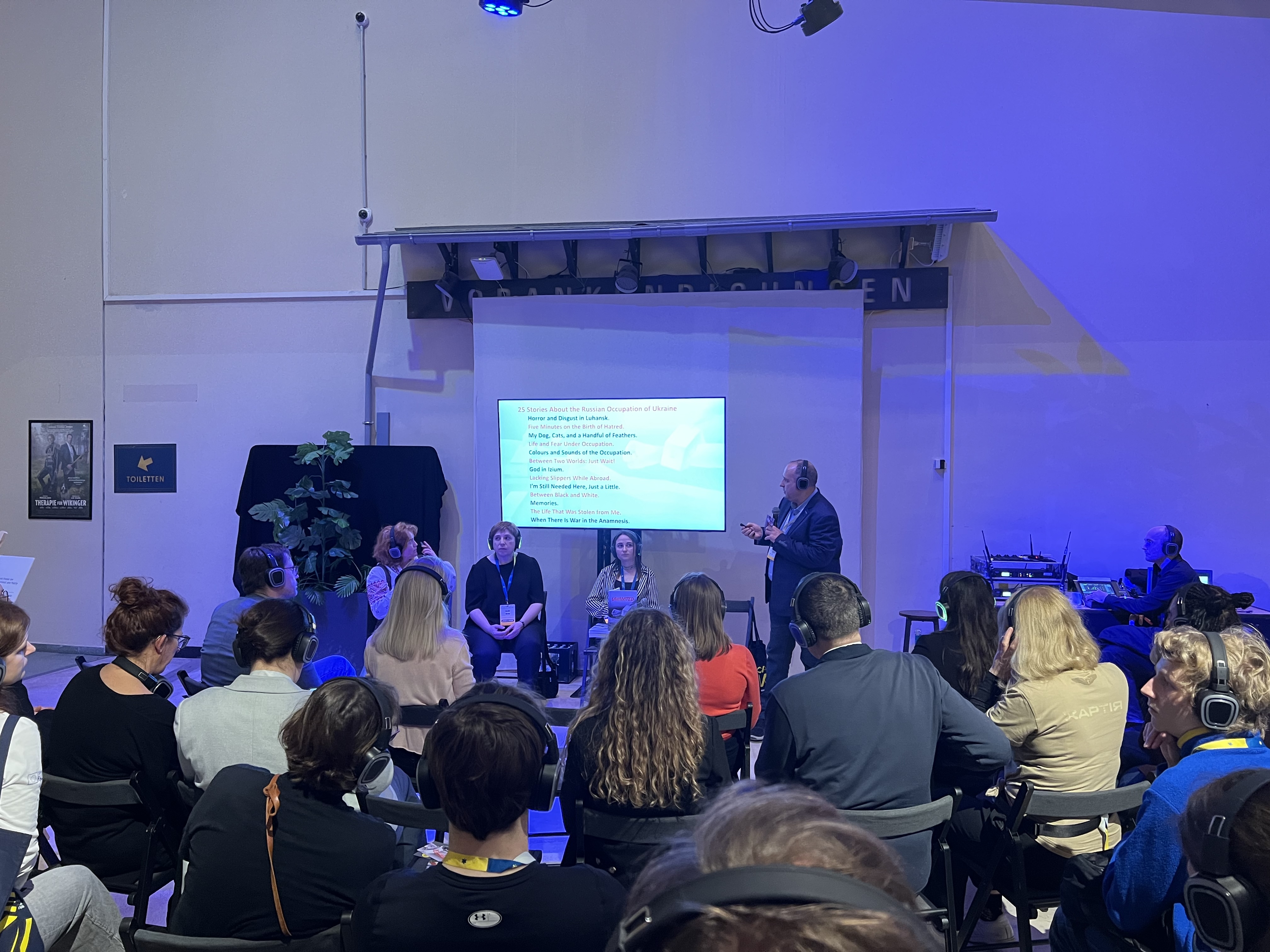
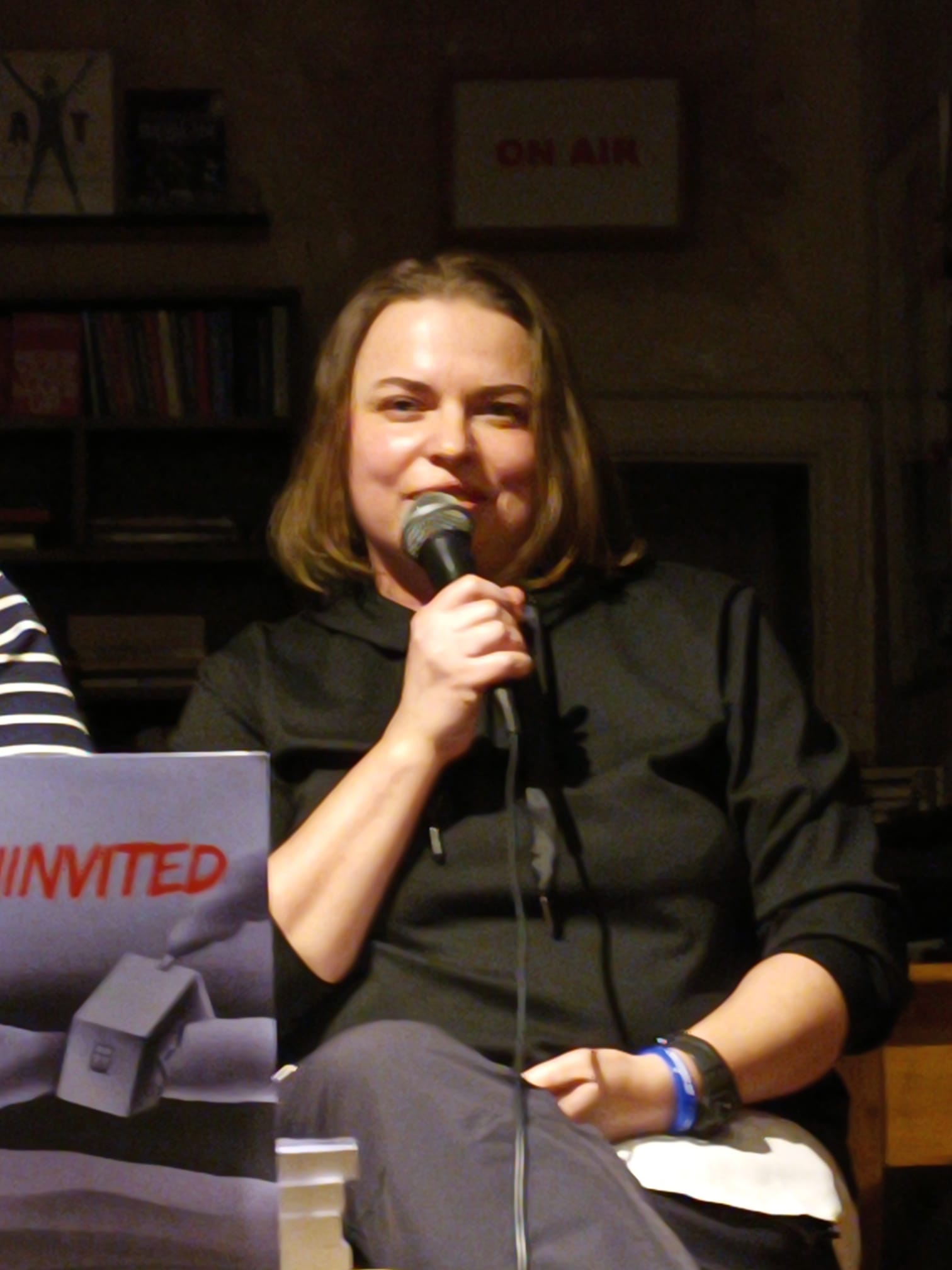
On the anniversary of Russia’s full‑scale invasion, the Eastern Ukrainian Centre for Civic Initiatives organized three presentations of the book ‘Uninvited’, describing life under Russian occupation.
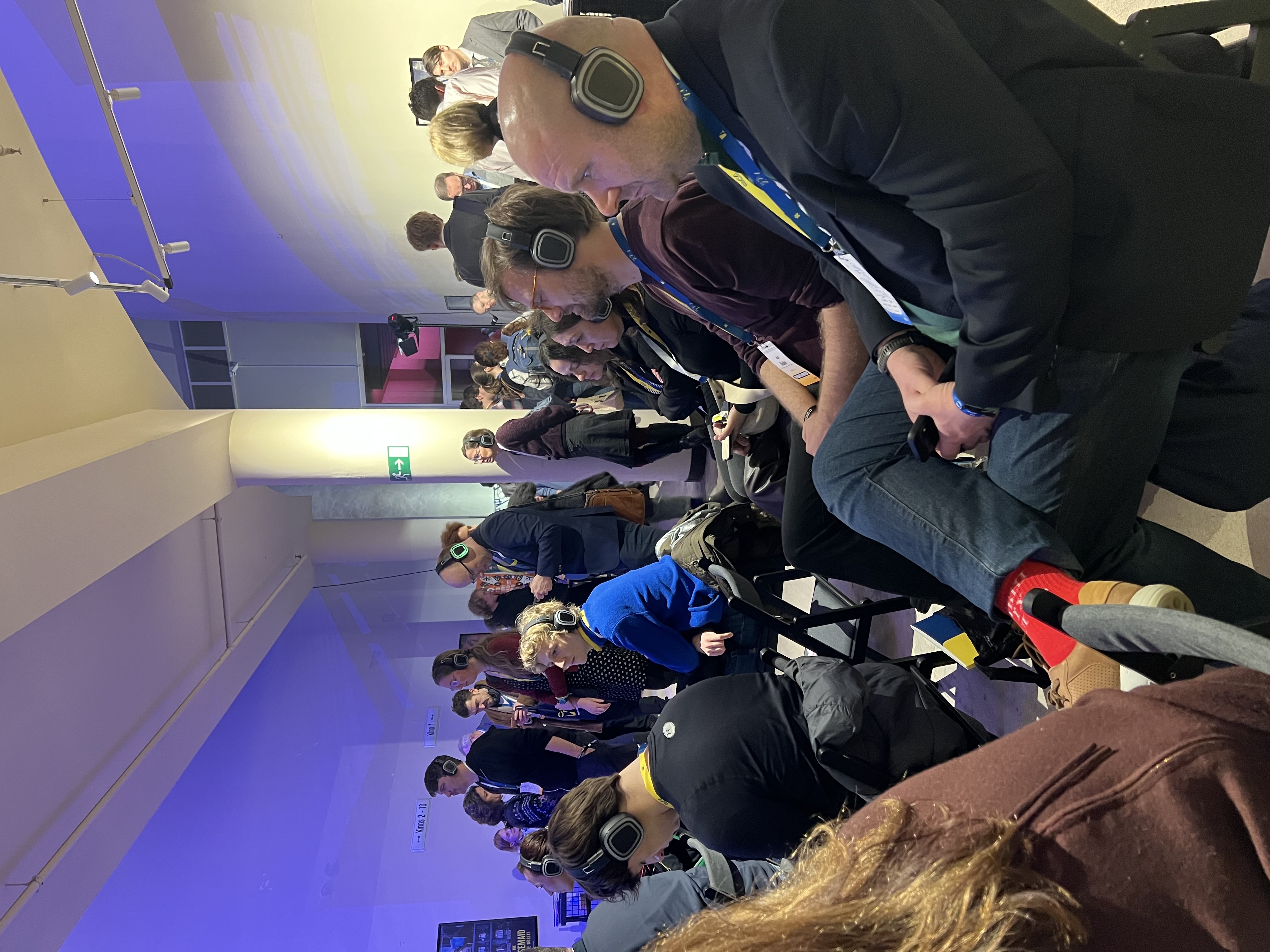
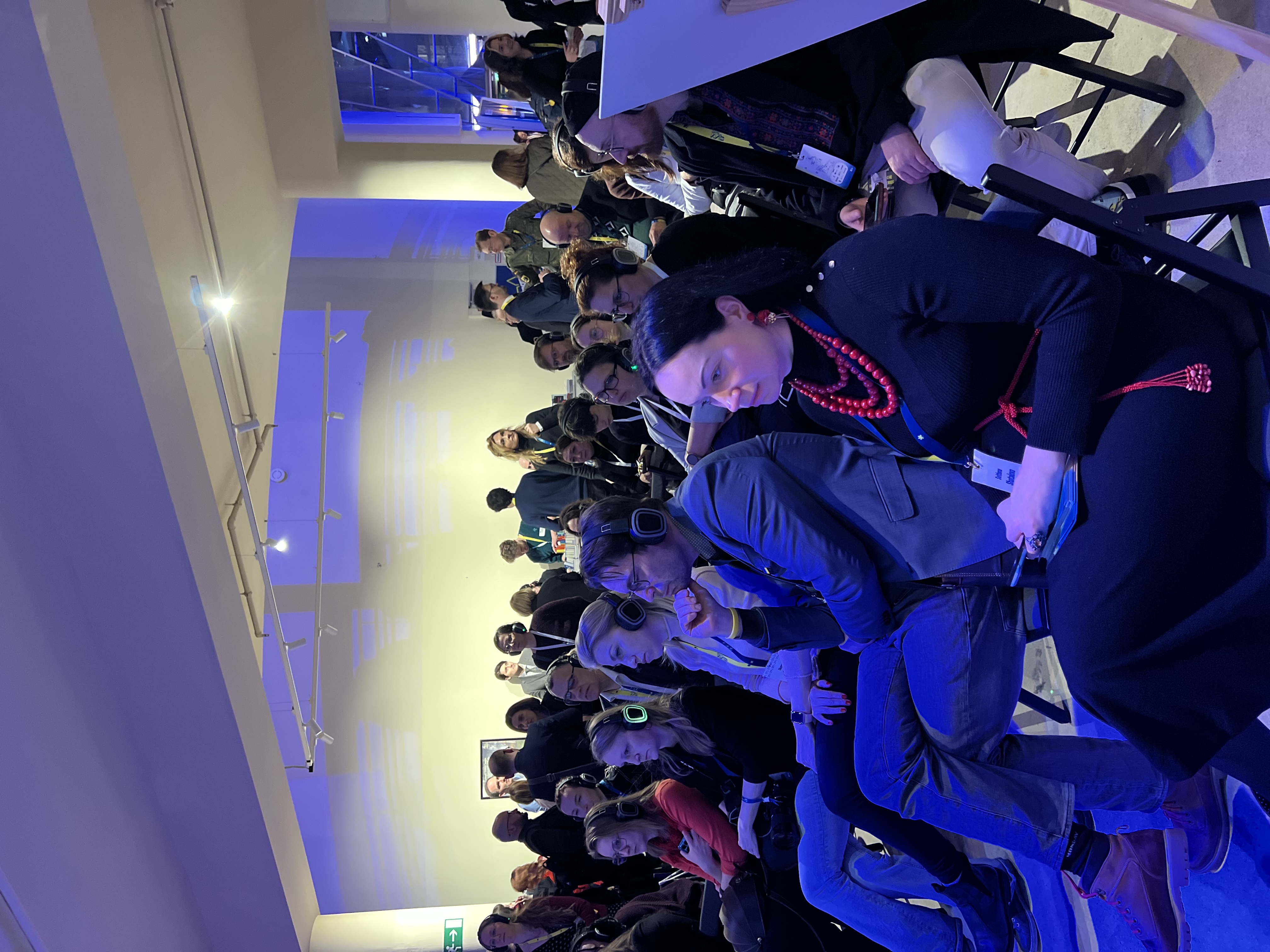
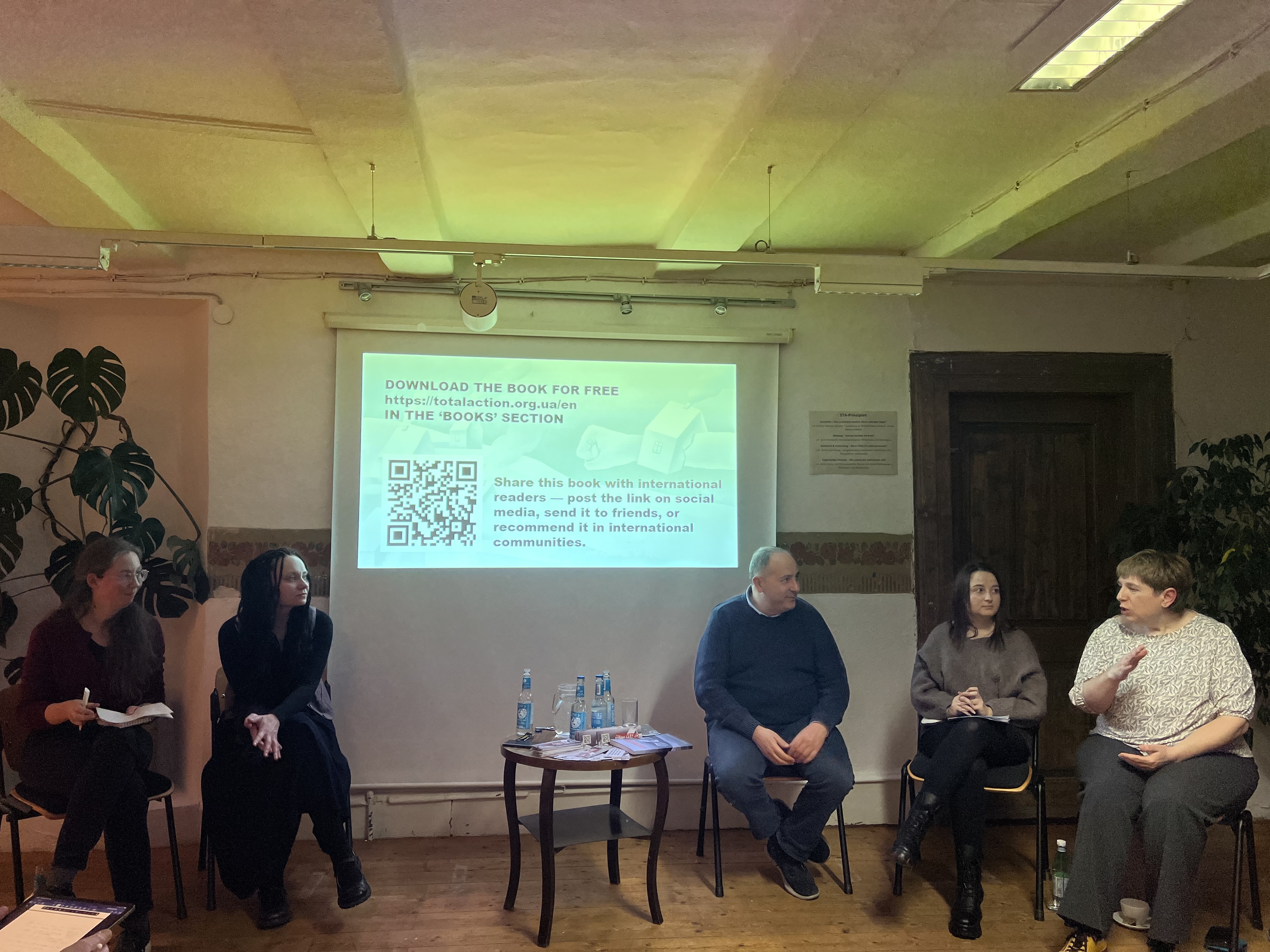
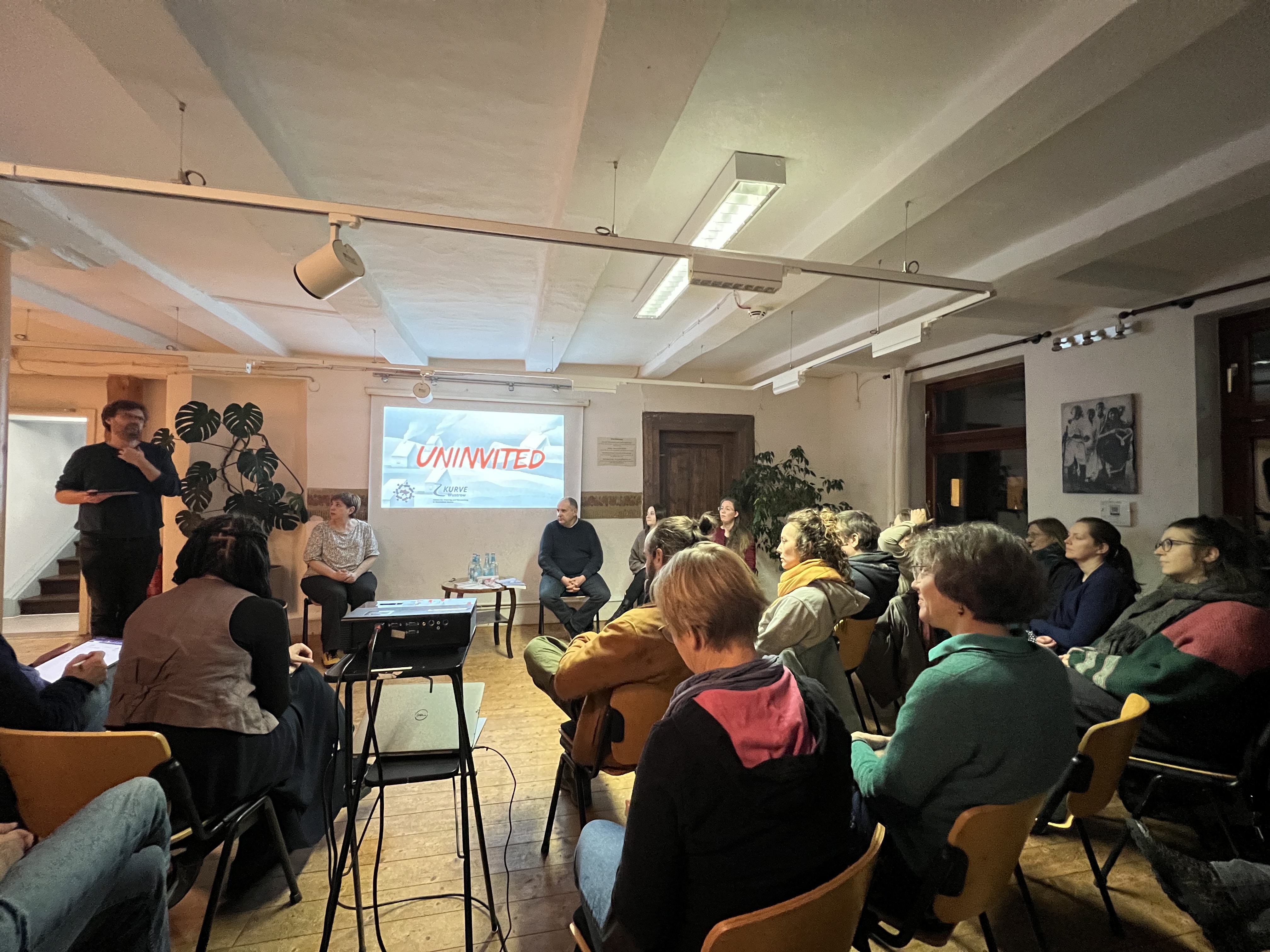
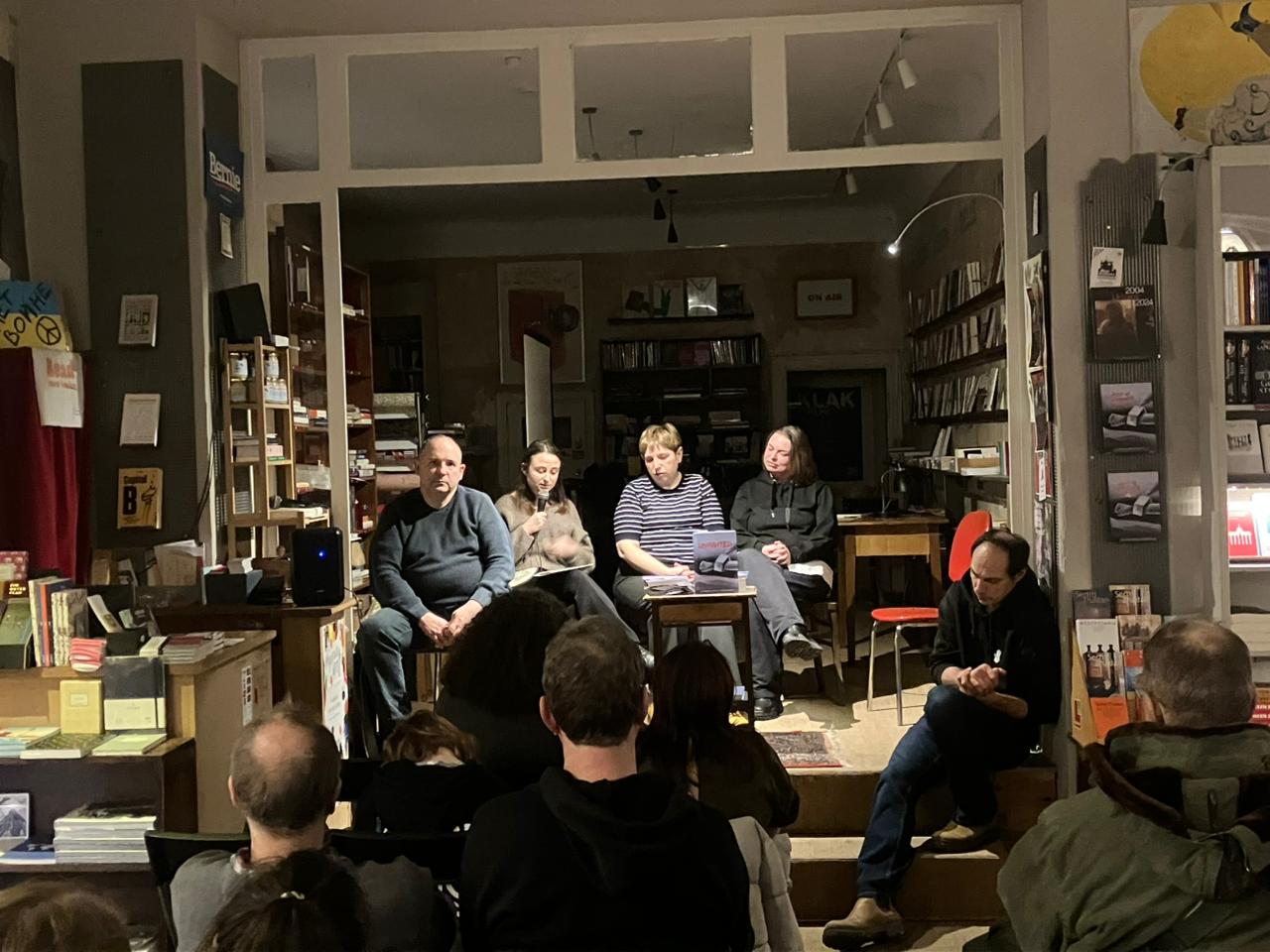
One of the presentations took place in Berlin during the Cafe Kyiv discussion platform — a regular forum to talk about Ukraine, the war, and European security — which brings together diplomats, experts, journalists, and civil society representatives. Another meeting was held in Wustrow at the office of KURVE Wustrow peace organisation, which has been working for many years in the field of non-violent conflict transformation. The third presentation was hosted by the independent bookshop Buchbund Bookstore in Berlin, a cultural space in the Neukölln district where literary readings and political discussions are held regularly.
The meeting in Wustrow was opened by Joss Becker, a representative of KURVE Wustrow and coordinator of cooperation projects with Ukraine. He recalled that cooperation with the Ukrainian organisation has been ongoing since 2016 and initially focused on documenting war crimes dating back to 2014.
‘We must not forget that the war began not in 2022. It has been ongoing since 2014. This book also tells about that,’ he told the German audience.
Volodymyr Shcherbachenko, Head of the Eastern Ukrainian Centre for Civic Initiatives, discussed the book's concept and its creation.
The idea for the book has emerged from many years of documenting war crimes, which EUCCI has been doing since 2014. Initially, the team gathered facts about unlawful detention, torture, sexual violence, and loss of property for international courts and human rights mechanisms. Over time, the interviews began to include questions not only about the crime itself, but also about how people are coping with the war, what they are feeling, and where they find the strength to carry on.
Following the beginning of full-scale invasion in 2022, when it became clear that not everyone in Western Europe understood what it meant to ‘live under occupation’, the idea arose to address the international audience directly. The team announced an open call for stories, received over a hundred applications, formed two groups of authors, and worked with them on the texts.
‘Some people in Western Europe think that if you’re a civilian and don’t cause trouble for the occupiers, life is almost the same — just the flag has changed. But that’s not the case. Many things in your life change.’
One of the authors, Nataliia Huran, shared her story of life in the Kyiv suburbs between Hostomel, Bucha, and Borodianka. She started her speech by reflecting that when you live in your own home, have a job, have paid off your loans, and are planning for the coming years, it seems as though life is established and will always be that way.
Before the full-scale invasion, the war seemed to her like something distant — just lines on a map and names of towns in the news that ‘mean nothing’. She honestly admitted that before, she had never thought about how people lived in refugee camps, what flowers they planted, what they cooked for dinner, or what they joked about.
‘One day, my life simply collapsed like a house of cards… All my plans came down to mere survival. My greatest achievement that day was walking 28 steps from the door to the well and filling two buckets with water.’
To make those 28 steps, the woman had to devise a ‘military strategy’: to time her movements between mortar barrages, avoid coming under fire from helicopters and ‘random’ tank shelling, and not encounter Russian soldiers who were looting houses.
‘Sometimes people talk about the war in such a terrifying way that you want to look away. But my story is about how the normal life of an ordinary person is destroyed,’ she explained.
Another author of the book is journalist Valentyna Fedorchuk from Kherson. At the beginning of the full-scale invasion, her seven-year-old daughter was 120 kilometres away, but there were more than ten Russian checkpoints between them.
‘I had to make an impossible choice: save my own life so I could see my child again, or risk everything to tell the truth,’ she said.
So, she stayed documenting protests, disappearances, and terror, and writing a letter to her daughter in case she did not survive.
‘The Russian occupation does not begin with tanks. It begins with information. With propaganda. I’d love for you to learn about the Russian occupation only from books and never from your own experience,’ she told the German audience.
Eight months later, she was able to hug her daughter. Today they live in Kherson — a front-line city.
‘We just want to live in our city, at home. I want my child to have a childhood without explosions,’ said Valentyna.
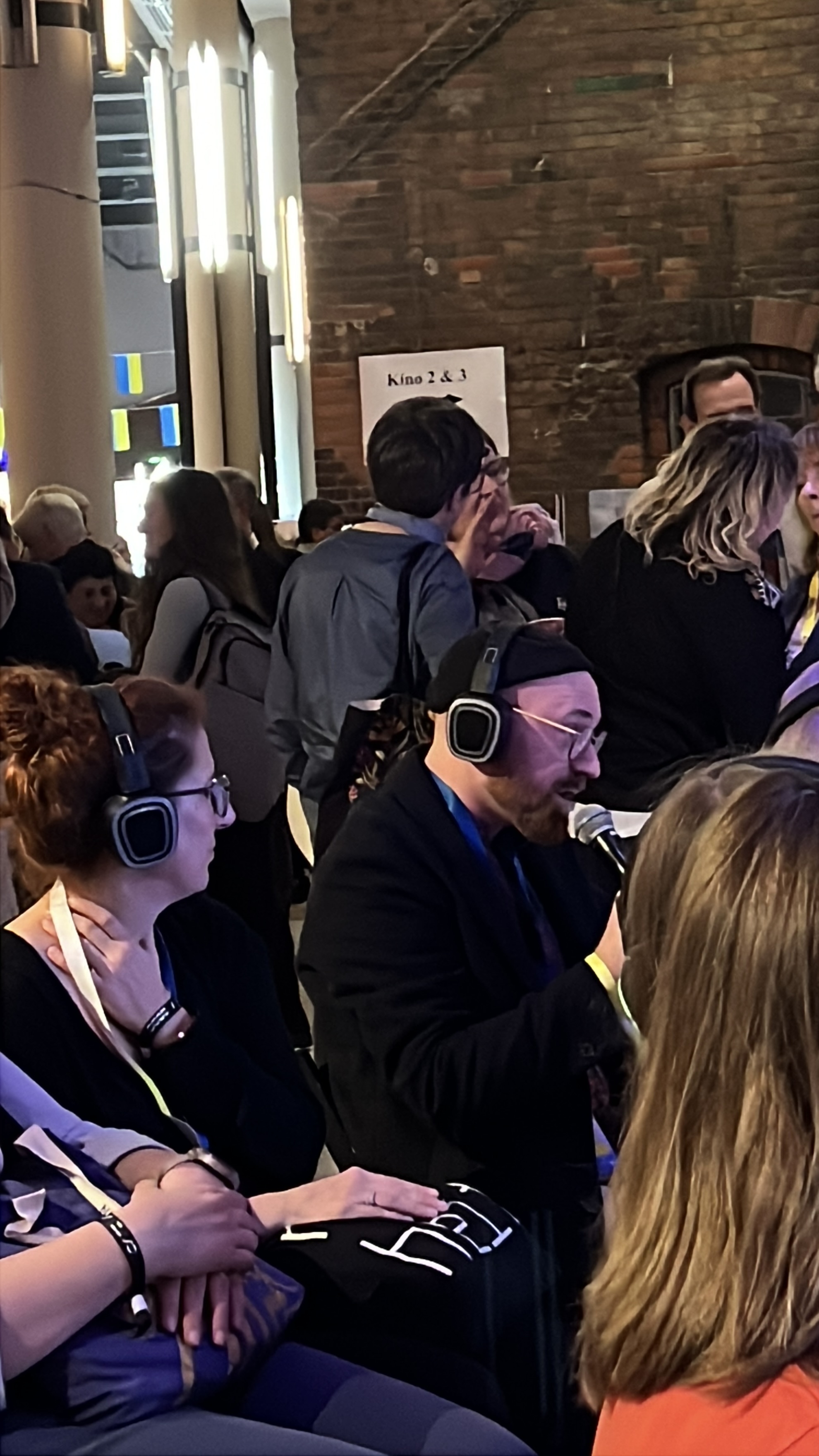
The audience’s questions concerned not only the book’s content, but also how to move forward with such an experience. Participants were interested in how the authors’ families and close people reacted to the decision to publish their personal stories; they asked to tell more about what these years of war meant to them beyond the stories in the book.
This book was prepared as part of the project ‘Strengthening Civil Society for the Transformation of the Culture of Memory – Non-Violent Efforts to Counter Russia’s War Against Ukraine’ by the Eastern Ukrainian Centre for Civic Initiatives with the support of Kurve Wustrow – Centre for Training and Interaction in Non-Violent Action as part of the Civil Peace Service (CPS) project.
