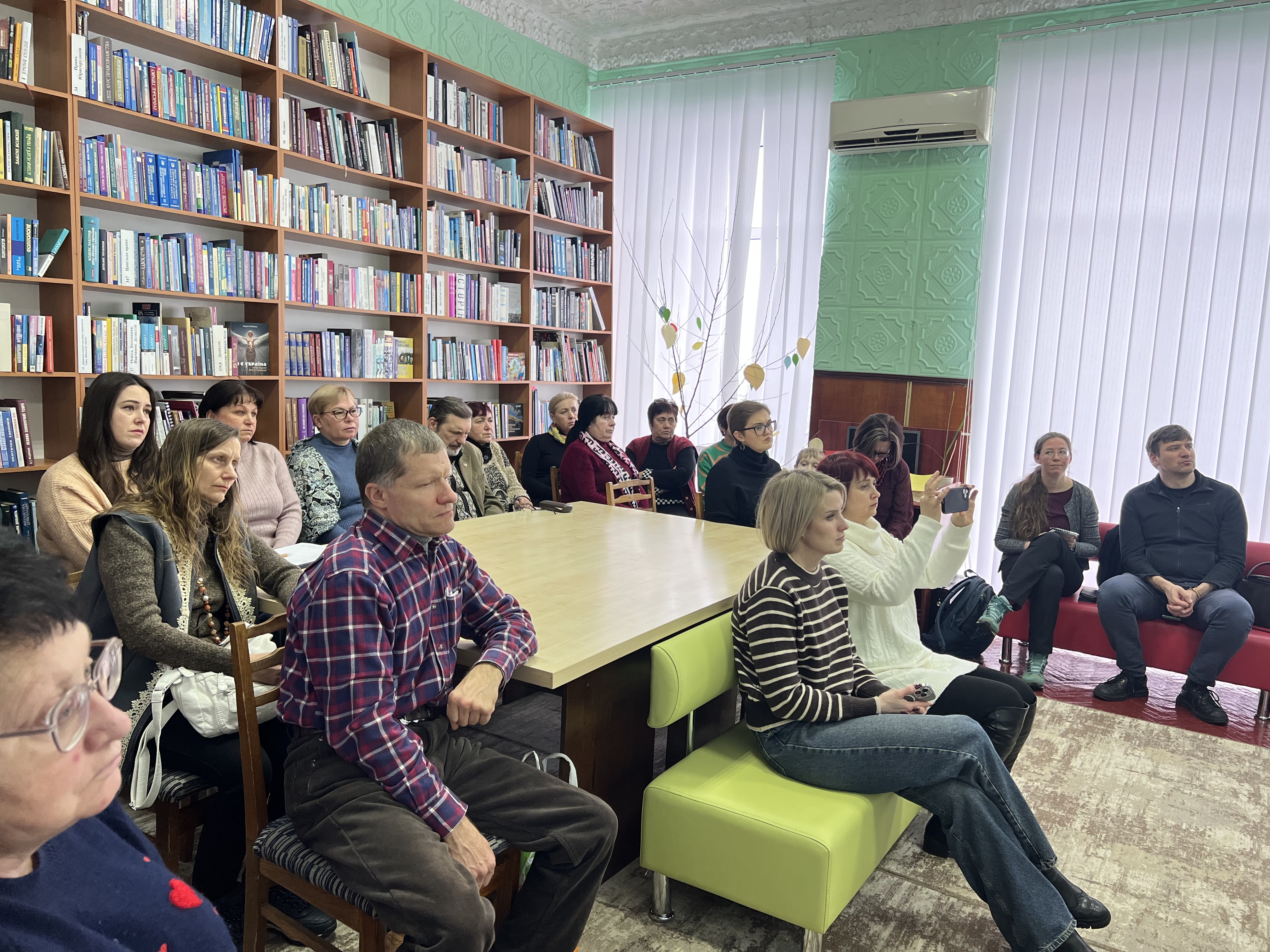
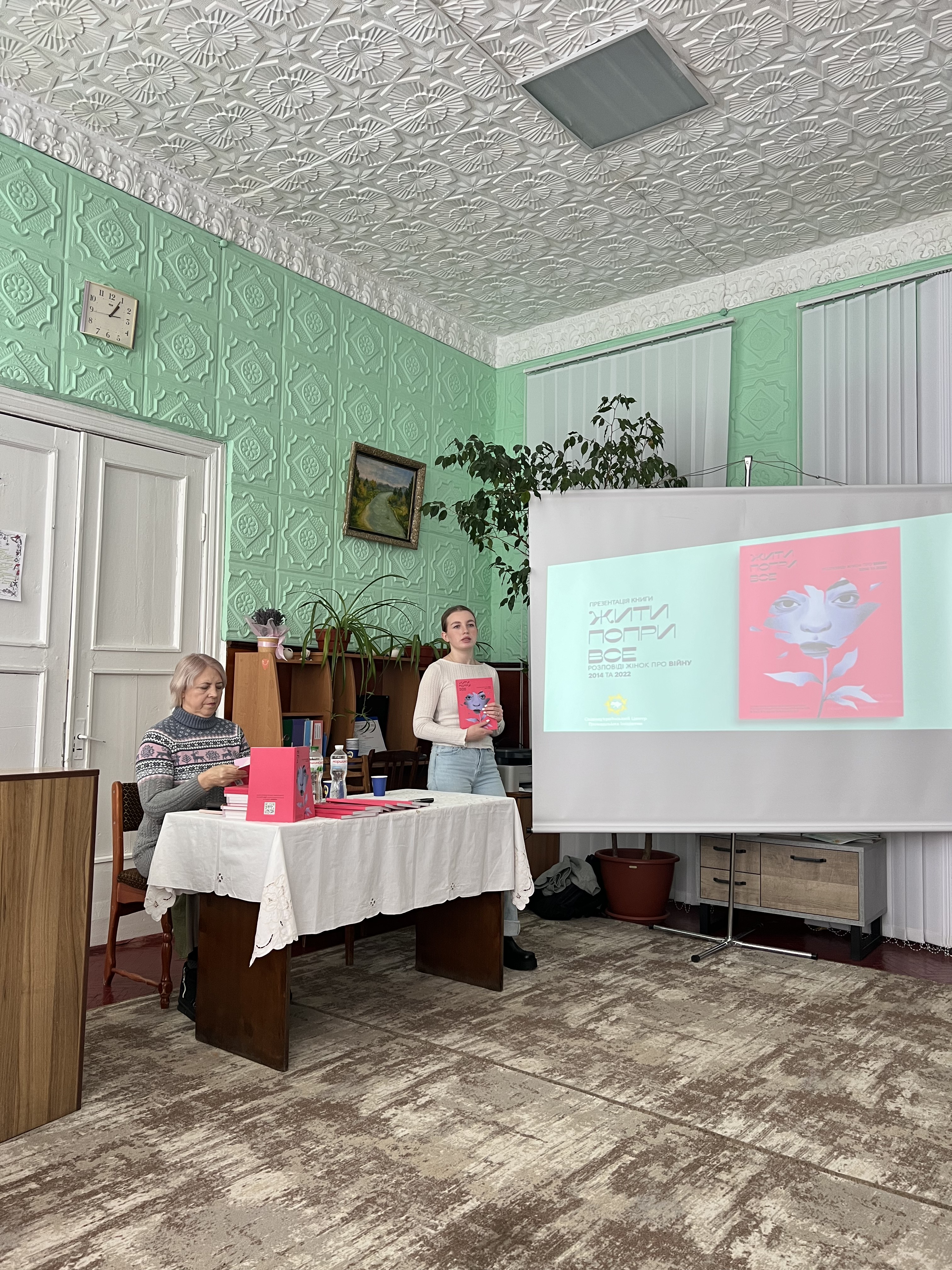
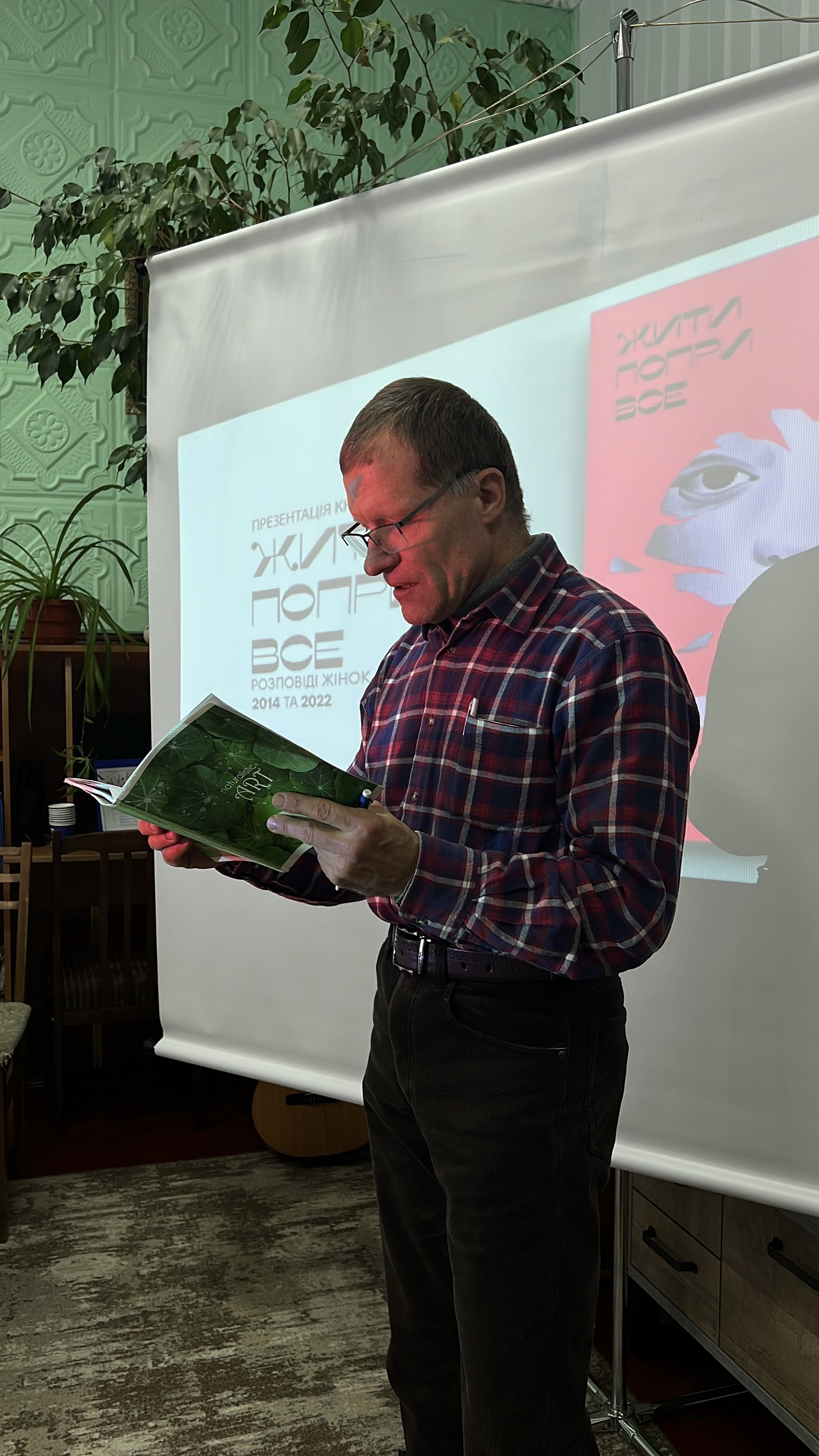
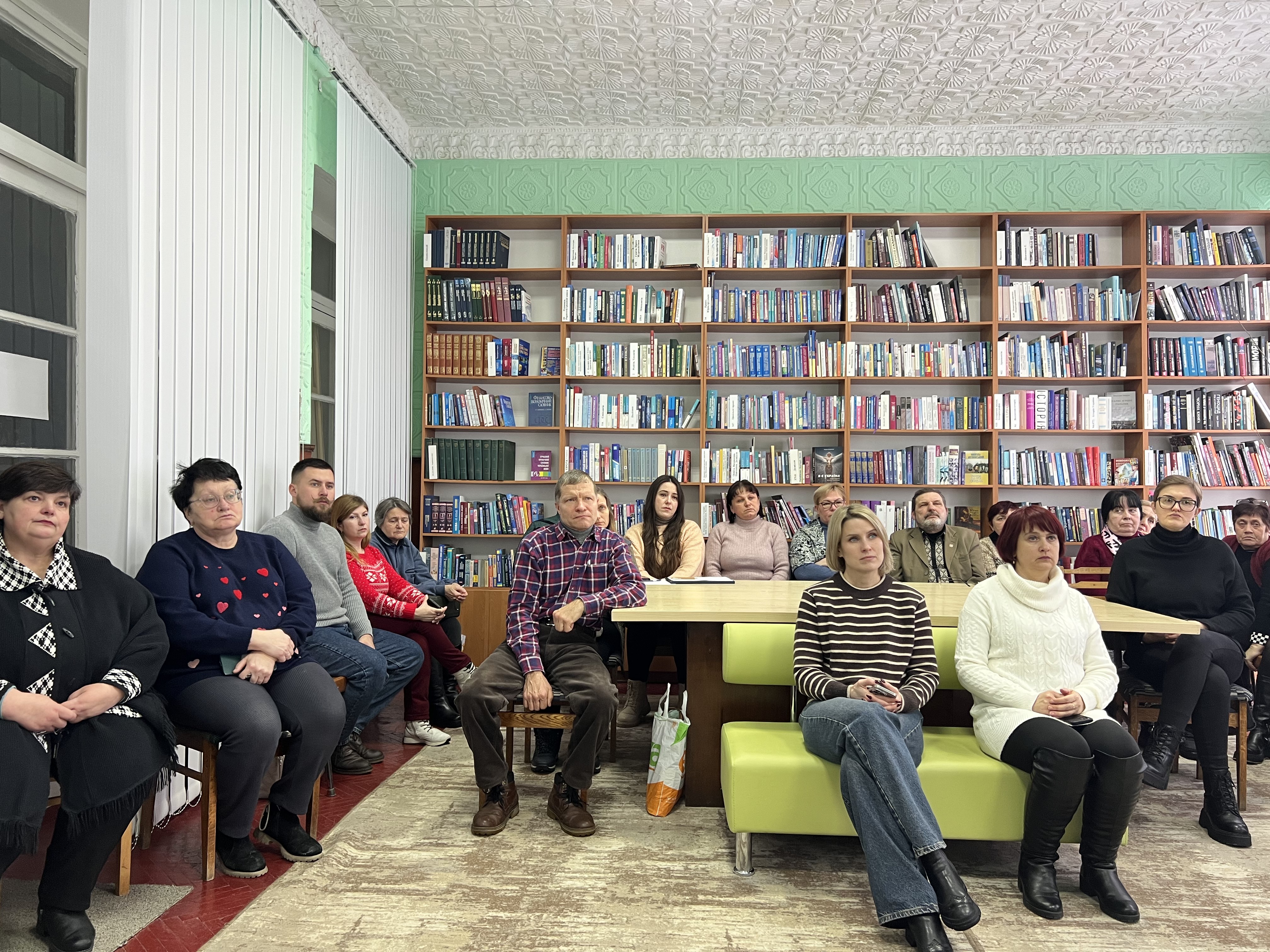
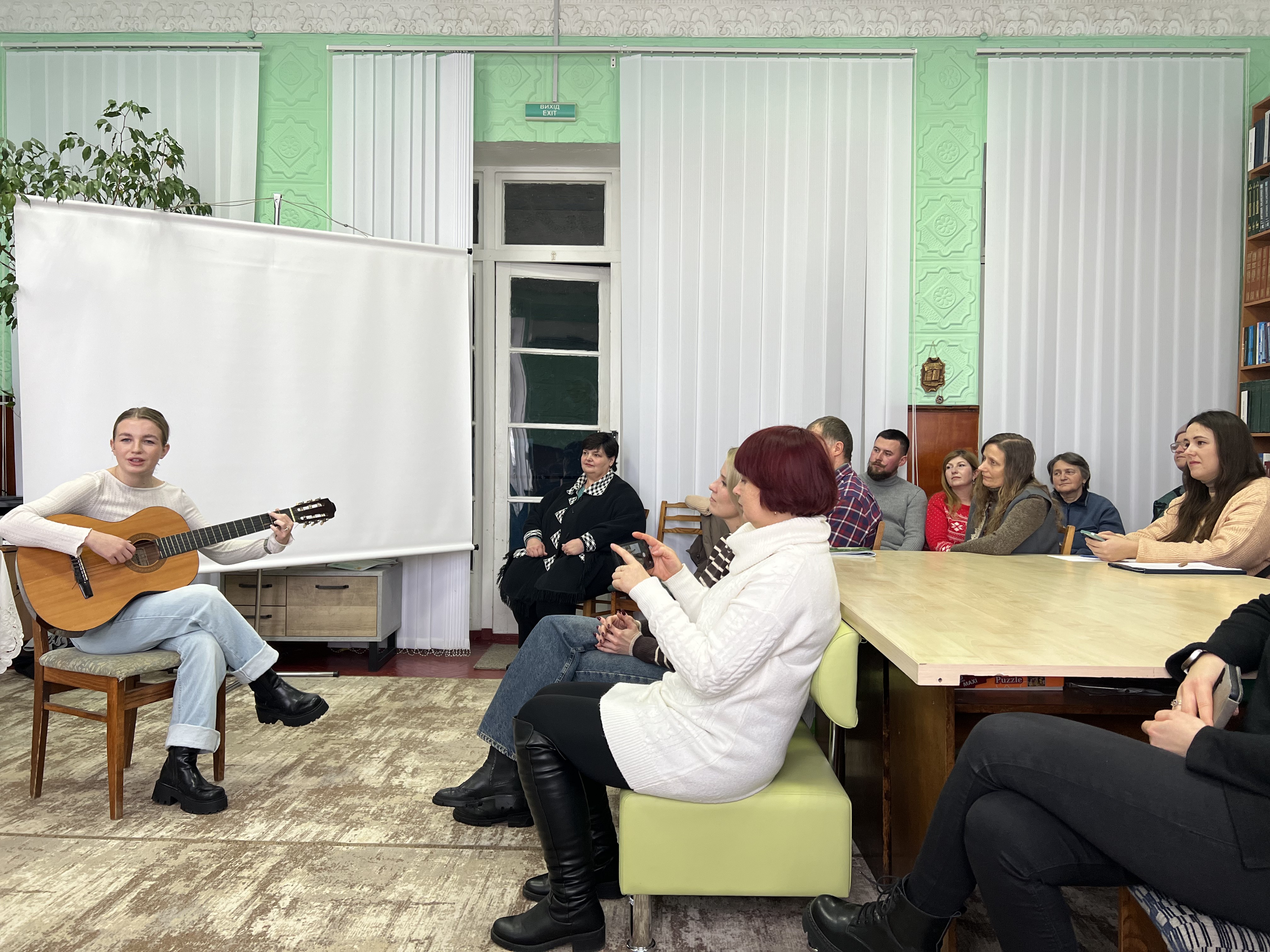
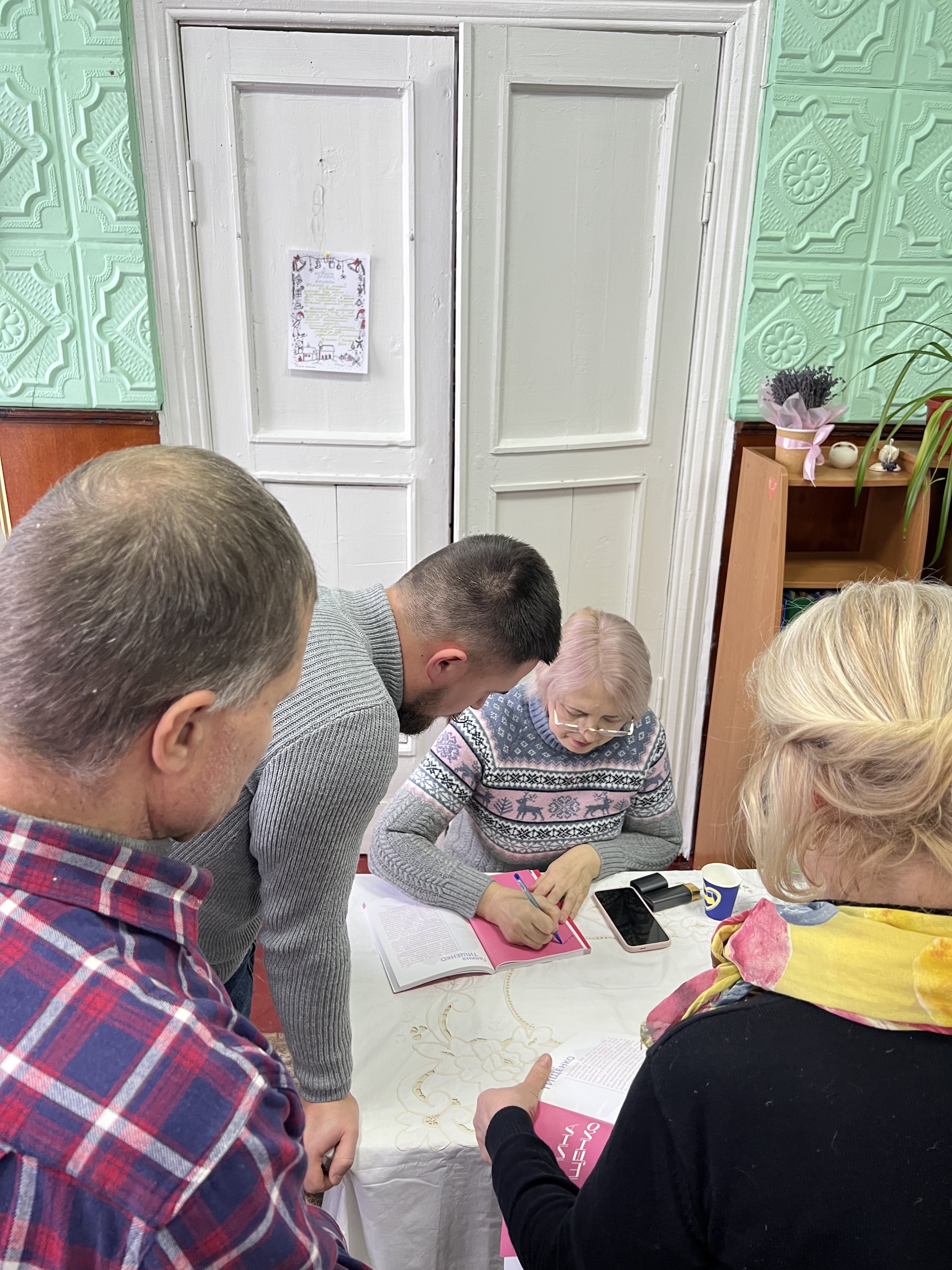
The book ‘Living Against All Odds: Women’s Stories of War, 2014 and 2022’ was presented at the Yahotyn Central Library for Adults in Yahotyn, Kyiv Oblast, on 29 January. It contains the stories of 11 Ukrainian women of various professions, ages and from different regions, who wrote about their experiences of the war and their search for resilience.
The book was compiled by the non-governmental organisation Eastern Ukrainian Centre for Civic Initiatives, which has been documenting war-related human rights violations since 2014.
One of the first stories was the one by Maryna Suprun, a co-author and EUCCI employee. She was 16 when she survived a month in captivity together with the residents of the village of Yahidne in Chernihiv oblast, whom the occupiers had herded into a school basement.
‘There were 367 people in the basement on the area of 150 square metres. There was hardly any air. By the second week, we were getting water from the sewers as the occupiers had drained all the wells.’
They cooked using expired rations or spoiled ‘humanitarian aid’. But the worst part, according to the girl, was not the physical exhaustion, but the constant fear and uncertainty:
‘They would come into the basement, press a machine gun to someone’s temple, and pulled the bolt playing the Russian roulette. They took girls away — simply pointing a finger: ‘This one — today’.’
Another co-author, Halyna Tyshchenko, a representative of SEMA Ukraine, spoke about the violence she survived during the occupation of the Kyiv oblast in 2022.
According to her, the occupier humiliated her, abused her physically and psychologically, and threatened to kill her if she left the house.
‘You think that it’s forever. That there won’t be a second chance. And only faith helped me survive,’ she noted.
Following the de-occupation, criminal proceedings were initiated regarding war crimes. Subsequently, she became involved in civic activism to speak on behalf of those who can no longer testify.
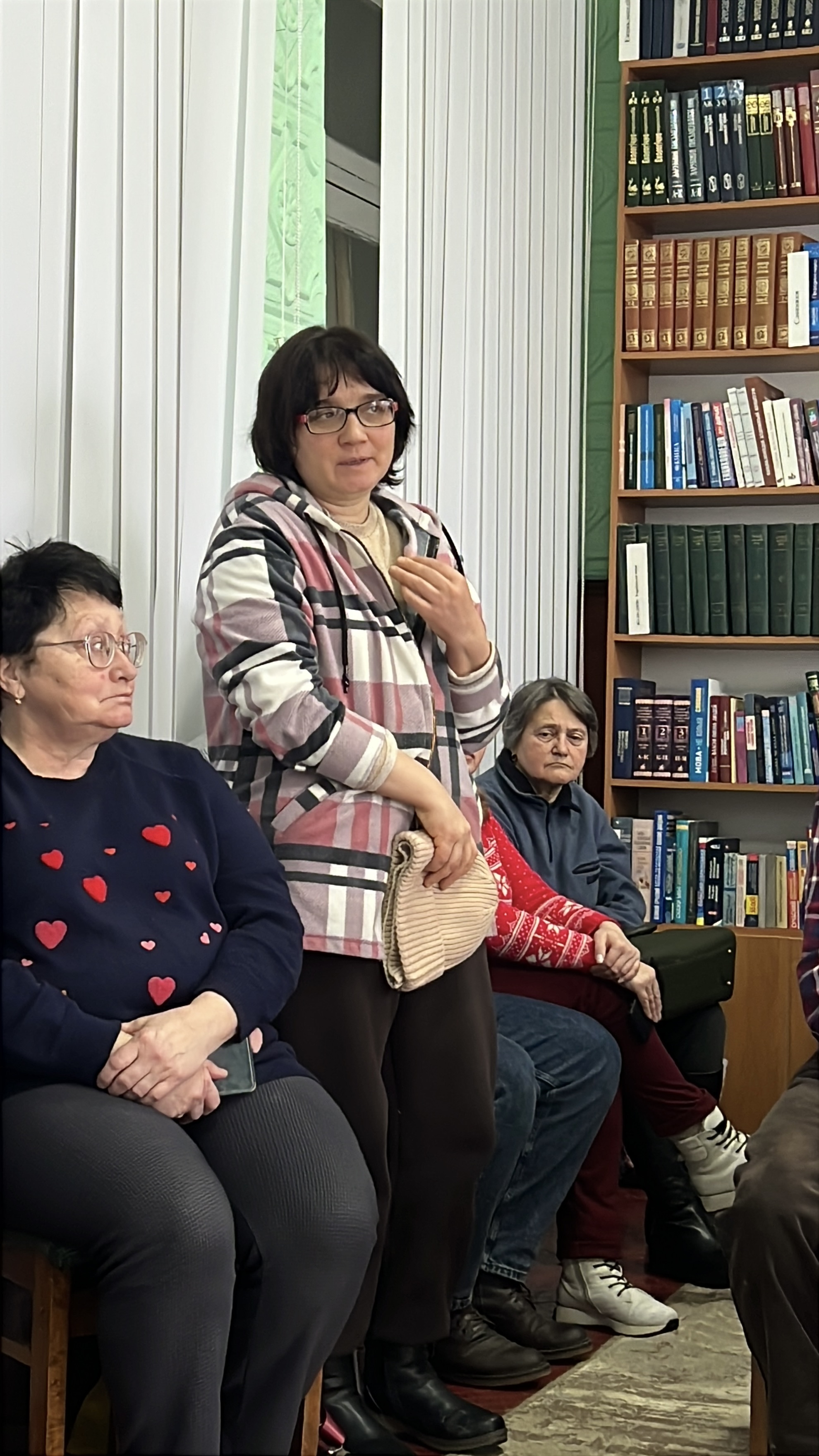
The book presentation continued with a discussion. One of the first questions concerned the occupiers themselves, i.e. their appearance and origins.
The authors explained that various units had taken part in the occupation. Buryats, Tuvinians and Yakuts often housed in the homes of civilians, whilst so-called ‘ethnic Russians’ were stationed at headquarters, particularly in schools. Witnesses recalled that the occupiers spoke openly about the chance to ‘choose houses’ to live in and make use of local residents’ property.
Another question was addressed to Halyna Tyschenko and concerned her personal choice made even before the full-scale invasion:
‘Do you regret leaving Donetsk oblast and moving to Kyiv oblast, given what you have experienced here?’
She told that at the time of her leaving her home, Kyiv oblast seemed to be a safe place where war was impossible. No one could predict the events in Bucha, Irpin and Borodianka. According to Halyna, this experience demonstrated the key point: there are no geographically safe solutions in this war.
Questions were amended by commentaries. An IDP from Sumy oblast thanked the authors for their openness and courage in speaking about trauma:
‘You show that a person can survive even something like this, and life can go on. It is not your fault. It could have happened to anyone.’
There were also reflections on the reluctance of some in society to hear difficult stories:
‘Many people avoid listening to such stories because it disrupts their comfort zone. But silence is also a form of violence.’
The second edition of ‘Living Against All Odds: Women’s Stories of War, 2014 and 2022’ and its further distribution were made possible by the ‘Strengthening Civil Society for the Transformation of the Culture of Memory – Non-Violent Efforts to Counter Russia’s War Against Ukraine’ Project implemented by the Eastern Ukrainian Center for Civic Initiatives with the support of Kurve Wustrow – Centre for Training and Interaction in Non-Violent Action as part of the Civil Peace Service (CPS) project.
