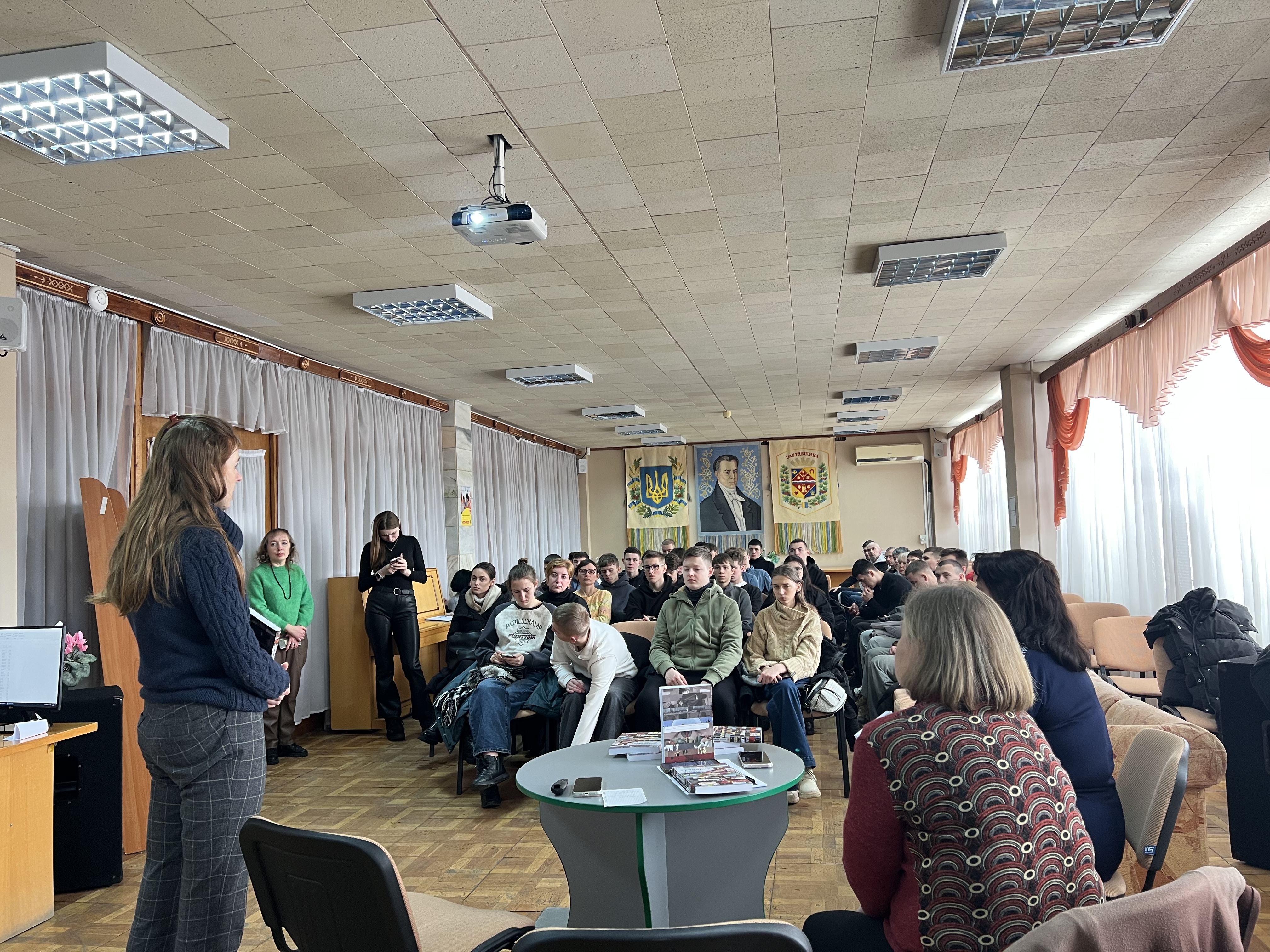
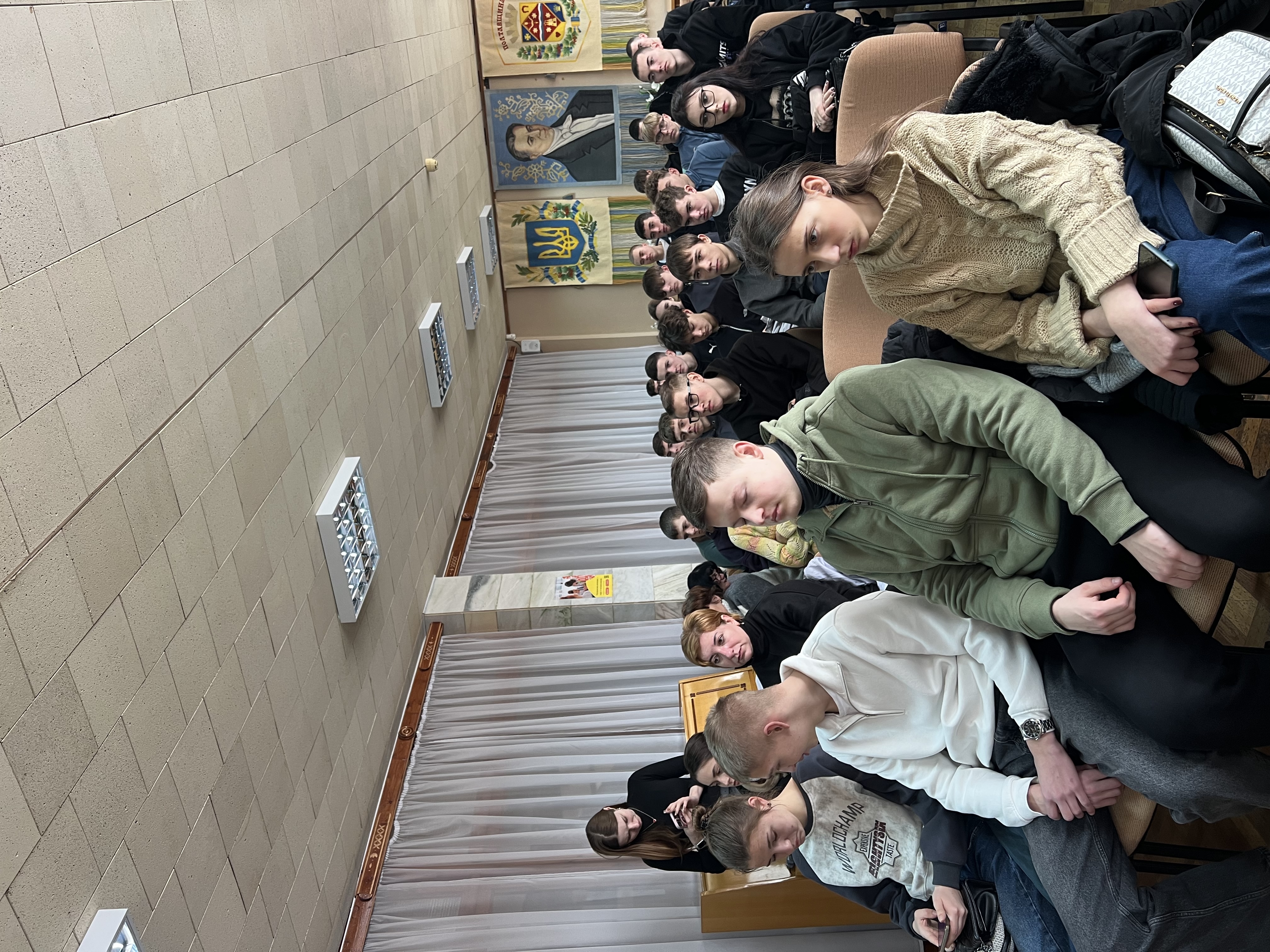
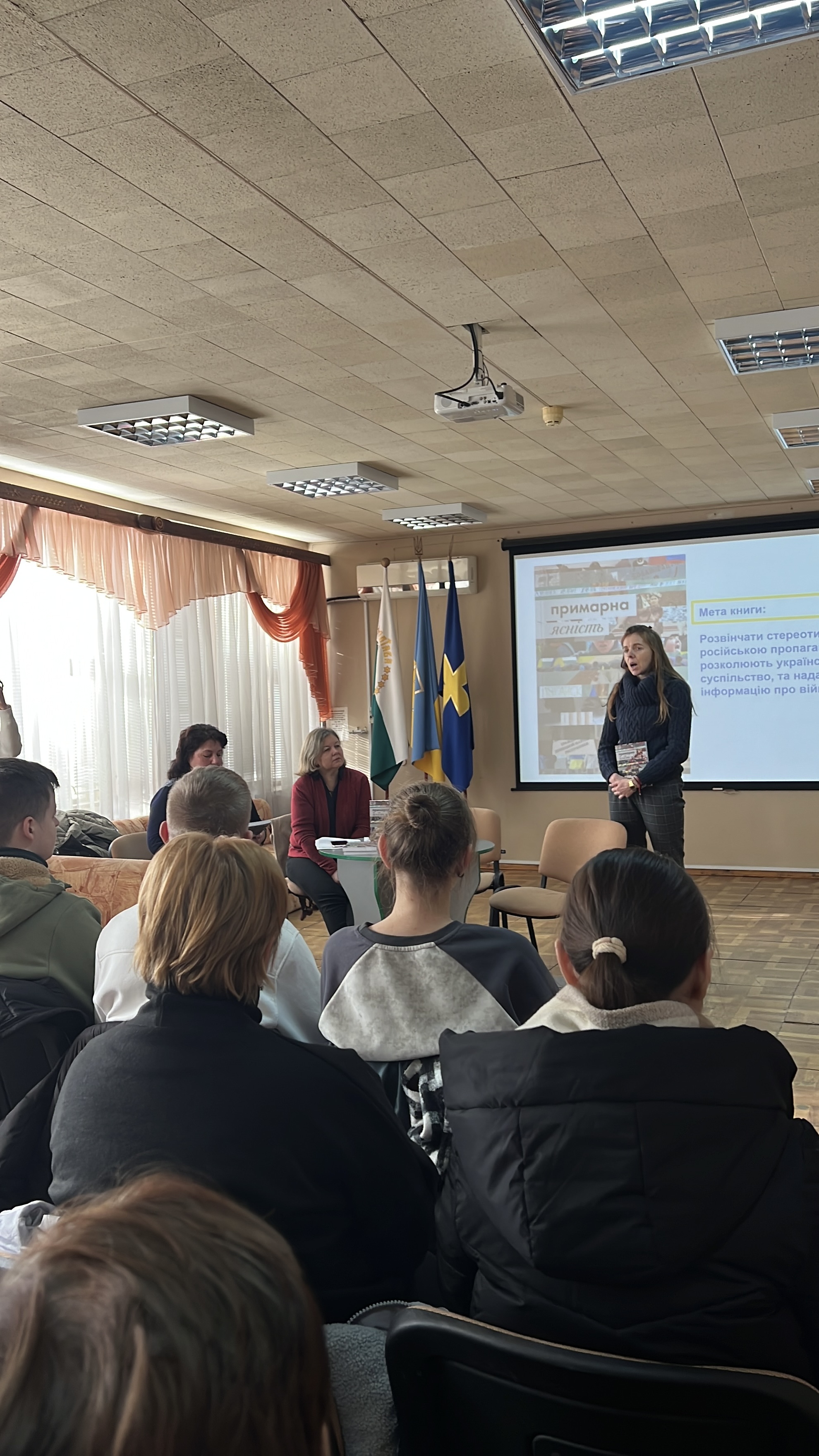
On 23 January, the book ‘Unclear Clarities: Myths and Stereotypes Around the War and Donbas’ was presented at the Kotliarevskyi Oblast Library in Poltava on the occasion of Unity Day in Ukraine.
People have been talking about the war in Donbas for over ten years, but myths imposed by Russian propaganda — about ‘mass support for Russia’ and ‘no resistance’ — still persist in Ukrainian society. This was the focus of the presentation, which took the form of a discussion with young people.
The book was created on the initiative of the Eastern Ukrainian Center for Civic Initiatives, which has been documenting war-related human rights violations since 2014 such as: captivity, torture, as well as sexual and gender-based violence.
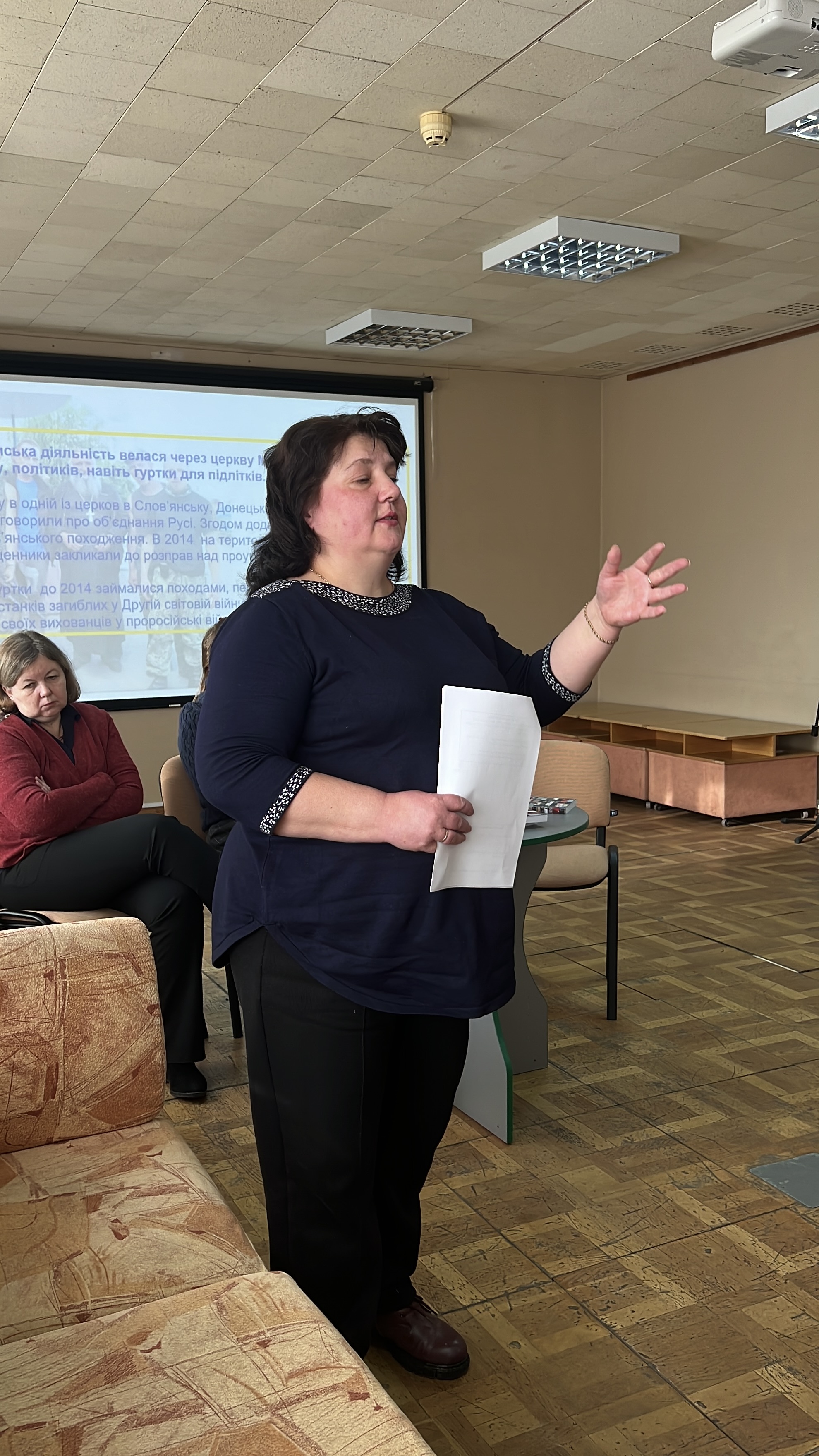
Speakers included Yuliia Chistiakova, a lawyer at EUCCI and co-author of the book, as well as eyewitnesses Liudmila Milokost and Stalina Chubenko.
Although most of the texts were written before the 2022 full-scale invasion, the authors are convinced that the problems described in the book have not gone away.
‘We thought that after 24 February 2022, this material had lost its relevance because of the unity shown by society. But the war is going on, and information has once again become a weapon,’ emphasised Yuliia Chistiakova.
According to her, the very same information mechanisms that Russia used effectively in 2014 are being applied again today: the stigmatisation of residents of the occupied territories, the split of the society, and the fear of return.
During the event, the discussion emphasized that the rise in the number of pro‑Russian rallies in Donetsk and Luhansk in spring 2014 was largely due to protesters imported from Russia. These people stayed in hotels, were brought to rallies by organised bus convoys, and created an image of ‘popular support’ for the media.
Former captive Liudmila Milokost, who lived in Luhansk before the occupation, also described how pro-Russian rallies were organised in the city:
‘They brought people in by bus. A deputy opened a garage, handed out flags and posters with slogans, and after the rally, collected everything back and paid them.’
Participants recounted how Russian language teachers were recruited by the Russian security services, and how the ‘Russian world’ was imposed through education, the church, and youth groups.
‘There were 60 schools in Luhansk. And only two with Ukrainian as the language of instruction. Propaganda worked through Russian-backed teachers: quietly and unnoticed,’ said Liudmyla Milokost.
Liudmyla also recalled the seizure of the SBU building in Luhansk on 6 April 2014:
‘At first, there were unarmed marginalised people, but that was just a smokescreen. The armed ones entered the city at night. This wasn’t a spontaneous event – it was an operation.’
The participants also spoke about the fake ‘referendums’ by which Russia attempted to legitimise the occupation.
‘There were just four polling stations in a city of half a million people like Mariupol. What expression of the will of the people can we talk about?’ noted Yuliia Chistiakova.
Stalina Chubenko’s story about her son Stepan was particularly poignant:
‘When his teacher started campaigning for Russia, he stood up and sang the Ukrainian national anthem.’
According to her, most of the children in the class were pro-Ukrainian, but they were exactly those teenagers whom the occupation targeted first.
‘The myth that ‘the people of the east called the war themselves’ is a lie. There was resistance. It was simply unarmed,’ emphasised Stalina Chubenko.
There were IDPs from Donbas at the presentation. One of them admitted that he had previously only heard a simplified version of events:
‘They hardly ever mentioned the pro-Ukrainian rallies. But it turns out they did take place and were massive.’
The authors emphasised that the book is not just about the past.
‘By understanding how they tried to break us, we can defend ourselves better today,’ concluded Yuliia Chistiakova.
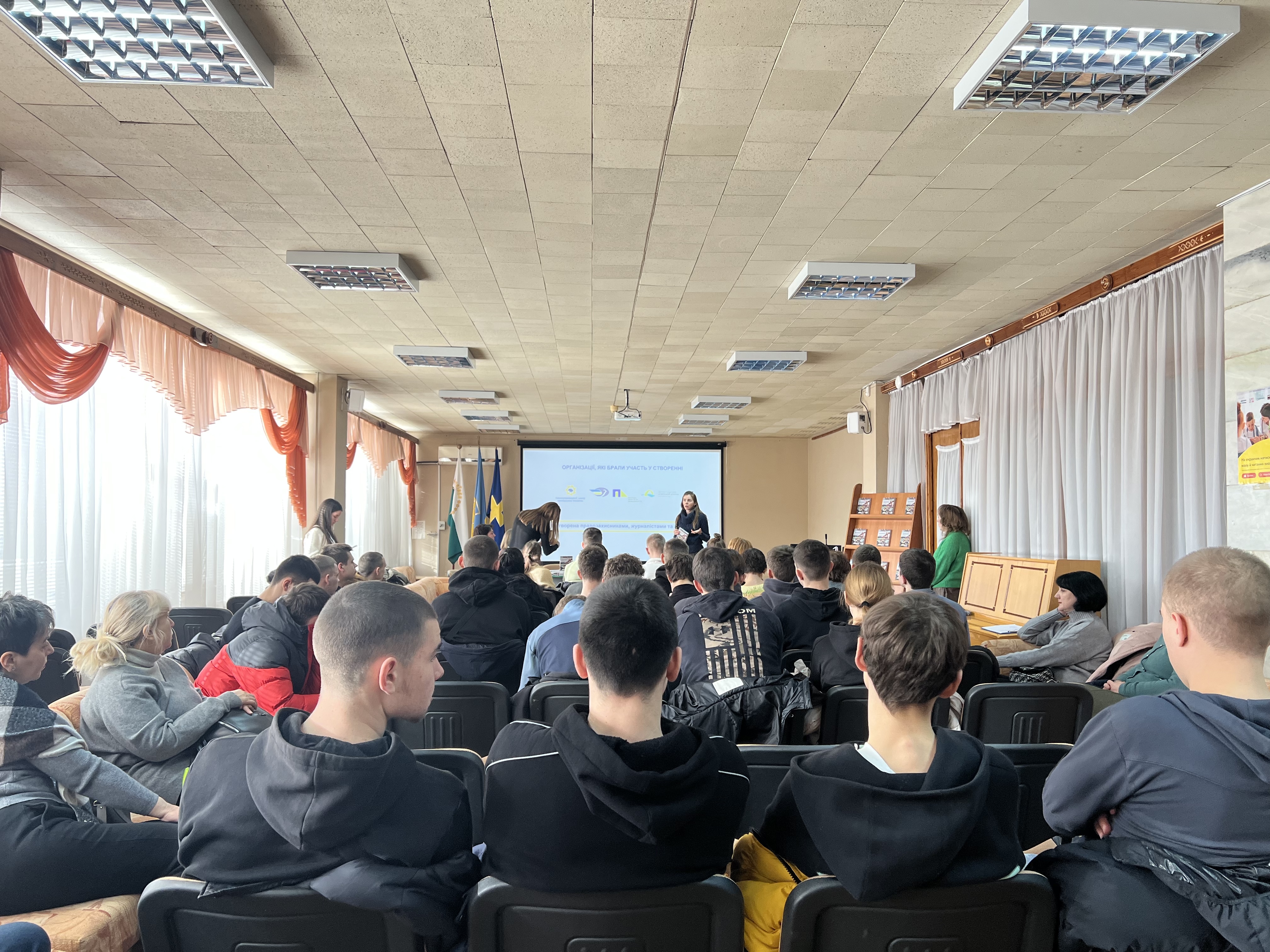
This book was prepared as part of the project the ‘Strengthening Civil Society for the Transformation of the Culture of Memory – Non-Violent Efforts to Counter Russia’s War Against Ukraine’ by the Eastern Ukrainian Center for Civic Initiatives, the NGO ‘Public Committee for Protection of Citizen’s Constitutional Rights and Freedoms’, the ‘Moloda Prosvita Prykarpattia’ NGO, and the Crisis Media Center ‘Siversky Donets’, with the support of Kurve Wustrow – Centre for Training and Interaction in Non-Violent Action as part of the Civil Peace Service (CPS) project.
